
Honeycomb Energy accelerates solid-state battery layout
2025-07-25
Honeycomb Energy accelerates solid-state battery layout
On July 22, Yang Hongxin, Chairman of Svolt Energy, revealed that the company is fully accelerating the research and development as well as mass production of solid-state batteries. Svolt Energy plans to begin trial production of its first-generation 140Ah semi-solid-state battery—manufactured on its 2.3GWh semi-solid-state production line—in the fourth quarter of 2025. This milestone not only marks a significant breakthrough for Svolt in solid-state battery technology but also positions the company as the exclusive battery supplier for BMW MINI’s next-generation models. Mass deliveries are expected to ramp up starting in 2027, injecting fresh momentum into the burgeoning new-energy vehicle market.
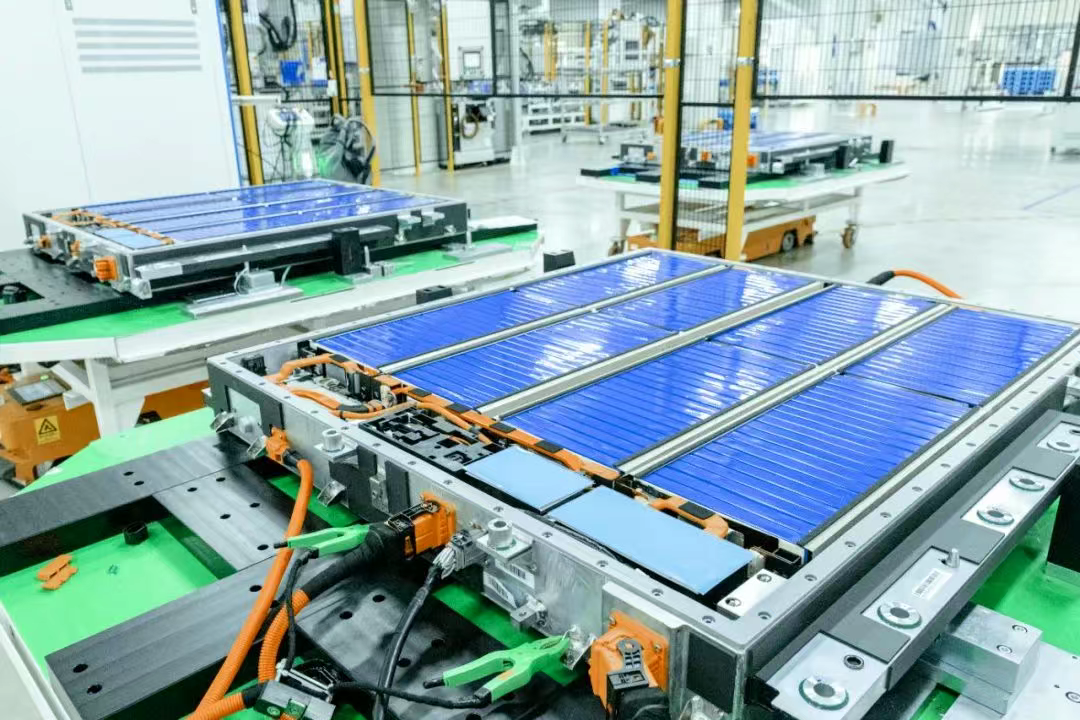
Additionally, Svolt Energy has further plans in the semi-solid-state battery sector. This year, it will begin mass production of its first-generation semi-solid-state pouch cells, boasting an energy density of 300 Wh/kg while offering significant cost advantages. Meanwhile, the second-generation semi-solid-state batteries are set to deliver an even higher energy density of 360 Wh/kg and a capacity of 78 Ah. In the realm of all-solid-state batteries, Svolt Energy’s first-generation all-solid-state cell products will achieve an impressive energy density of 400 Wh/kg with a capacity of 68 Ah, primarily targeting two key application areas: low-altitude aviation and automotive industries. All-solid-state batteries are widely regarded as the future direction of battery technology, thanks to their superior energy density and enhanced safety features. By proactively positioning itself in this cutting-edge field, Svolt Energy is undoubtedly well-poised to secure a competitive edge in the evolving market landscape.
Honeycomb Energy's layout in solid-state batteries is not an isolated case. Since July, several listed companies on China's A-share market have successively disclosed their latest advancements or mass-production timelines in the solid-state battery sector, signaling a vibrant and rapidly growing industry. Among them, Farasis Energy announced that it expects to complete a pilot production line for sulfide-based all-solid-state batteries with a designed capacity of 0.2 GWh by the end of this year, and will begin delivering 60Ah sulfide-based all-solid-state cells to its strategic partner customers. The company plans to further scale up its all-solid-state battery production capacity to the GWh level by 2026. Meanwhile, Changan Automobile anticipates achieving vehicle-mounted verification of solid-state batteries by 2026, with full-scale mass production of these batteries gradually rolling out starting in 2027—targeting an energy density of 400 Wh/kg. Delixi Group also stated that its solid-state batteries have already passed UN38.3 certification, laying a solid foundation for future expansion into international markets, and is actively advancing the construction of its pilot production line for solid-state batteries.
The materials side and the equipment side are both sending positive signals toward industrialization. Qingtao (Wuhai) Energy Technology Co., Ltd.'s dedicated solid-state battery materials project has already entered the trial-production phase, while the first batch of production equipment for the Phase I project at Sichuan Saikeda Power Technology Co., Ltd.'s manufacturing base has been smoothly delivered and is now ready for installation and commissioning. These projects are firmly paving the way for mass production of solid-state batteries by providing robust material and equipment support. According to Guotou Securities, China's solid-state battery industry shipments are expected to surge to 11.1 GWh by 2025, with projections soaring to 614.1 GWh by 2030—underscoring the technology's immense market potential. As solid-state battery technology continues to mature and its mass-production timeline accelerates, the technology is poised to unlock even greater market opportunities in emerging application areas such as new energy vehicles, low-altitude aviation, robotics, and AI, potentially speeding up the pace of industrial implementation. (This article is from Gasgoo.)
Translated from Sina Auto
Honeycomb Energy accelerates solid-state battery layout
2025-07-25
Honeycomb Energy accelerates solid-state battery layout
On July 22, Yang Hongxin, Chairman of Svolt Energy, revealed that the company is fully accelerating the research and development as well as mass production of solid-state batteries. Svolt Energy plans to begin trial production of its first-generation 140Ah semi-solid-state battery—manufactured on its 2.3GWh semi-solid-state production line—in the fourth quarter of 2025. This milestone not only marks a significant breakthrough for Svolt in solid-state battery technology but also positions the company as the exclusive battery supplier for BMW MINI’s next-generation models. Mass deliveries are expected to ramp up starting in 2027, injecting fresh momentum into the burgeoning new-energy vehicle market.
Additionally, Svolt Energy has further plans in the semi-solid-state battery sector. This year, it will begin mass production of its first-generation semi-solid-state pouch cells, boasting an energy density of 300 Wh/kg while offering significant cost advantages. Meanwhile, the second-generation semi-solid-state batteries are set to deliver an even higher energy density of 360 Wh/kg and a capacity of 78 Ah. In the realm of all-solid-state batteries, Svolt Energy’s first-generation all-solid-state cell products will achieve an impressive energy density of 400 Wh/kg with a capacity of 68 Ah, primarily targeting two key application areas: low-altitude aviation and automotive industries. All-solid-state batteries are widely regarded as the future direction of battery technology, thanks to their superior energy density and enhanced safety features. By proactively positioning itself in this cutting-edge field, Svolt Energy is undoubtedly well-poised to secure a competitive edge in the evolving market landscape.
Honeycomb Energy's layout in solid-state batteries is not an isolated case. Since July, several listed companies on China's A-share market have successively disclosed their latest advancements or mass-production timelines in the solid-state battery sector, signaling a vibrant and rapidly growing industry. Among them, Farasis Energy announced that it expects to complete a pilot production line for sulfide-based all-solid-state batteries with a designed capacity of 0.2 GWh by the end of this year, and will begin delivering 60Ah sulfide-based all-solid-state cells to its strategic partner customers. The company plans to further scale up its all-solid-state battery production capacity to the GWh level by 2026. Meanwhile, Changan Automobile anticipates achieving vehicle-mounted verification of solid-state batteries by 2026, with full-scale mass production of these batteries gradually rolling out starting in 2027—targeting an energy density of 400 Wh/kg. Delixi Group also stated that its solid-state batteries have already passed UN38.3 certification, laying a solid foundation for future expansion into international markets, and is actively advancing the construction of its pilot production line for solid-state batteries.
The materials side and the equipment side are both sending positive signals toward industrialization. Qingtao (Wuhai) Energy Technology Co., Ltd.'s dedicated solid-state battery materials project has already entered the trial-production phase, while the first batch of production equipment for the Phase I project at Sichuan Saikeda Power Technology Co., Ltd.'s manufacturing base has been smoothly delivered and is now ready for installation and commissioning. These projects are firmly paving the way for mass production of solid-state batteries by providing robust material and equipment support. According to Guotou Securities, China's solid-state battery industry shipments are expected to surge to 11.1 GWh by 2025, with projections soaring to 614.1 GWh by 2030—underscoring the technology's immense market potential. As solid-state battery technology continues to mature and its mass-production timeline accelerates, the technology is poised to unlock even greater market opportunities in emerging application areas such as new energy vehicles, low-altitude aviation, robotics, and AI, potentially speeding up the pace of industrial implementation. (This article is from Gasgoo.)
Translated from Sina Auto

Contact us
Email:
info@adtfm.com
Phone:
021-20532053
Address:
2nd Floor, No. 150 Jindian Road, Pudong New Area, Shanghai

Phone:021-50790270
Email:info@adtfm.com
Website:www.adtfm.com
Address: Room 403, Building B, No. 115 Guiqiao Road, Pudong New Area, Shanghai


Leave a message for inquiry