
DeepSeek enters the automotive industry: Two companies officially announce their partnership, and some owners have already had hands-on experience.
2025-02-08
DeepSeek enters the automotive industry: Two companies officially announce their partnership, and some owners have already had hands-on experience.
The DeepSeek craze, which took the entire Spring Festival holiday by storm, has finally made its way into the automotive industry! According to a Feb. 7 report from AutoThings, Lantu Automobile recently announced that it has successfully completed deep integration with the DeepSeek model. As a result, the Lantu Zhiyin—set to debut on February 14—will become the first mass-produced vehicle in the auto sector to incorporate DeepSeek, with an OTA update rolling out later that day to enhance select AI features. Meanwhile, yesterday, Geely Automobile officially revealed that its self-developed Xingrui large-scale AI model has also been seamlessly integrated with DeepSeek’s R1 model—but for now, there are no concrete plans to bring this advanced technology onboard any vehicles. In just 24 hours, two major automakers have simultaneously announced their adoption of DeepSeek, clearly demonstrating that after shaking up the AI community, DeepSeek is now poised to revolutionize the automotive industry as well.
This year during the Spring Festival, DeepSeek saw its downloads surge by 375% within just 7 days, propelling it to the No. 1 spot on the free charts of both the Chinese and U.S. App Stores. Its performance, which rivals that of OpenAI’s GPT-4o model, has truly set the tech world abuzz. Meanwhile, thanks to its groundbreaking architectural innovations, cost-effective high efficiency, versatile application scenarios, and strong support from open-source initiatives and the developer community, DeepSeek is indeed an ideal fit for adaptation within the automotive industry. By delivering impressive results with minimal performance overhead and training costs, DeepSeek has opened up opportunities for many automakers who lack the resources to independently develop full-stack in-vehicle AI models, thereby fostering greater equity in the adoption of AI technology across the industry.
Currently, DeepSeek has become an entity that the global tech industry simply cannot ignore, and its influence in the automotive sector is set to grow even further. It’s easy to predict that, in the coming period, more automakers will join DeepSeek’s growing community. Thanks to its open-source nature and highly efficient training capabilities, automakers are increasingly adopting DeepSeek for in-vehicle applications. This strong appeal is largely due to the model’s relatively low performance overhead, coupled with its adherence to the MIT License open-source protocol. Such features provide automakers with unparalleled flexibility and freedom in development, laying a solid foundation for integrating DeepSeek into their vehicles. Notably, Geely and Avatr have already taken the lead in this exciting race.
Following this deep integration, Geely will leverage the DeepSeek R1 model to perform distillation training on StarRui’s vehicle-control FunctionCall large model and the in-vehicle proactive interaction edge-side large model. The integrated AI system will not only accurately interpret users’ ambiguous intentions and precisely invoke approximately 2,000 onboard interfaces, but also proactively analyze users’ latent needs based on both in-car and external scenarios, enabling services such as vehicle control, proactive dialogue, and after-sales support—thereby significantly enhancing the overall intelligent interaction experience.
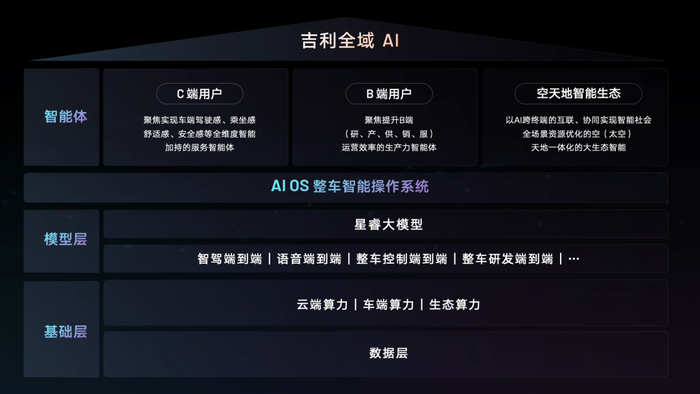
Previously, Geely’s all-domain AI technology system for smart vehicles was built on an AI-native OS. This system leverages the system-level large model AIOS as its platform, enabling flexible adaptation to various types of devices while ensuring both system security and user privacy—ultimately delivering efficient resource management and task scheduling. For instance, Geely’s new models will feature cutting-edge AI innovations such as an end-to-end voice large model developed on the AI-native OS, an AI-powered digital chassis, the Flyme Auto intelligent cockpit, and advanced autonomous driving capabilities—all seamlessly integrated through this robust framework. Moreover, after integrating with DeepSeek, its capabilities are likely to see further enhancements.
According to media reports, Lantu Automotive's intelligent cockpit has been fully integrated with DeepSeek, and the company plans to kick off a nationwide knowledge distillation training session using DeepSeek on February 14. Thanks to this deep integration with DeepSeek, Lantu Zhiyin's "Xiaoyao Cabin" will deliver a range of advanced features, including AI-powered multi-semantic command recognition, AI poetry creation, AI image generation, AI couplet writing, AI chat capabilities, and real-time AI information retrieval. This initiative is expected to significantly enhance the responsiveness, accuracy, and scalability of Lantu's in-car AI system.
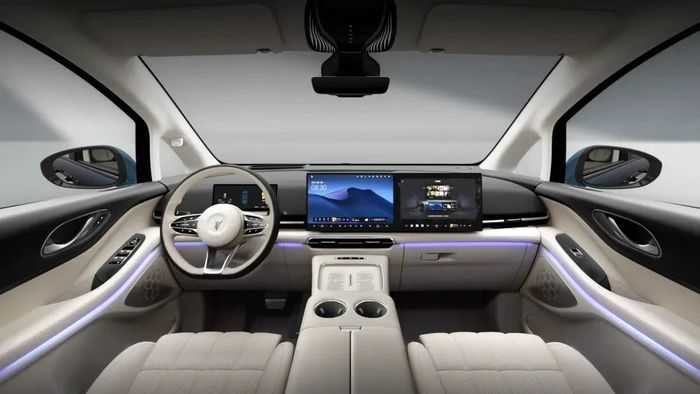
The car-machine cloud system of Avatr Zhiyin will continue to integrate and distill the DeepSeek R1 model. By applying model distillation to DeepSeek, Avatr not only optimizes the intelligent in-car experience and enables rapid technological iteration but also reduces the development and operational costs of its smart cockpit. According to Avatr’s internal plans, starting from February 14—next Friday—Avatr Zhiyin users will receive an OTA update, allowing them to experience the AI-powered intelligent cockpit feature. Additionally, Avatr Zhiyin’s car-machine system will gradually roll out DeepSeek-related functionalities, further enhancing the precision, flexibility, and intelligence of the interactive experience. It’s clear that automakers are choosing DeepSeek not only because of its widespread popularity but also due to its unique computational capabilities tailored specifically for smart cockpit applications. The DeepSeek R1 large-scale model is renowned for its exceptional reasoning abilities and highly efficient training methods. Leveraging reinforcement learning (RL) technology, it significantly boosts the model’s reasoning prowess, enabling effective training even with minimal amounts of labeled data.
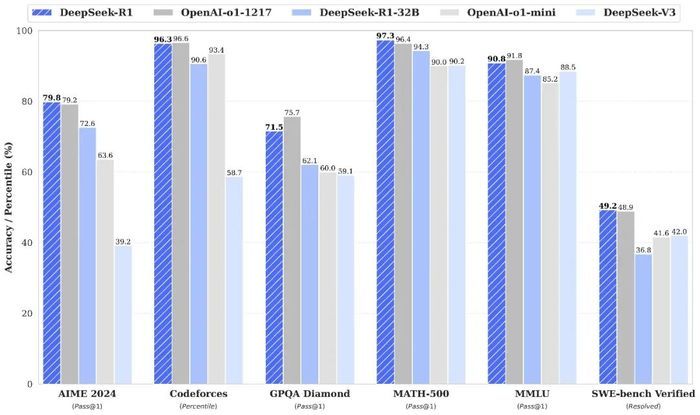
Compared to OpenAI's o1 model, DeepSeek R1 excels in multiple benchmark tests while offering a price that is just a fraction—about one-fiftieth—of o1's, making it incredibly cost-effective. Additionally, DeepSeek R1 leverages Chain-of-Thought (CoT) reasoning technology, enabling it to systematically break down complex problems and arrive at solutions through multi-step logical reasoning. The model also supports model distillation, allowing developers to transfer its advanced reasoning capabilities into smaller, more compact models tailored to specific use cases. However, techniques like distillation and quantization remain challenging, yet some highly skilled "DIY enthusiasts" have already successfully integrated full-featured versions of DeepSeek into their vehicles—demonstrating remarkable ingenuity and paving the way for others eager to follow suit.
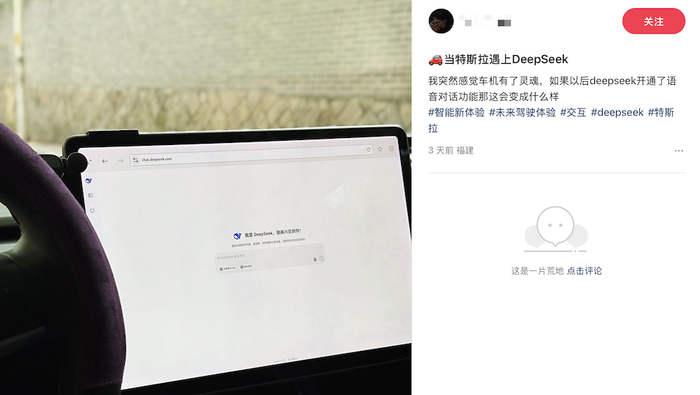
From the social media accounts of many users, it appears that numerous car owners have started accessing DeepSeek's full functionality directly through their vehicle’s infotainment systems. Owners of cars like NIO, Lantu, and Tesla—whose systems support browser capabilities—are now leveraging their in-car interfaces to quickly launch DeepSeek web tabs, enabling seamless access to the large-scale AI model. They’re even using the voice input tools built into their vehicles to engage in "conversations" with the model.
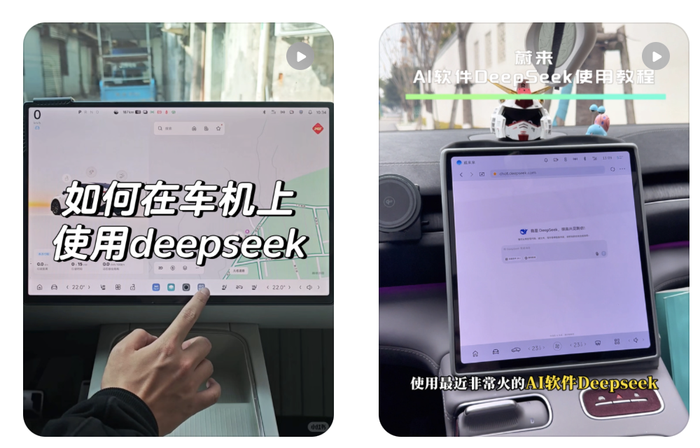
However, using a keyboard or operating the vehicle’s infotainment system while driving does carry certain risks. Therefore, we can also look forward to more and more automakers embracing domestically developed large models like DeepSeek, enabling native access in a more seamless way. Overall, if automakers aim to deploy large AI models directly in vehicles, techniques such as model distillation and quantization become essential—and these processes may inevitably impact the model’s overall performance. Distilled models leverage knowledge transfer, passing insights from a larger "teacher" model to a smaller "student" model. This approach not only helps maintain high predictive accuracy but also significantly reduces model complexity, making it ideal for environments with limited data or constrained computational resources. That said, training distilled models can be relatively complex, often requiring additional time and resources. On the other hand, quantized models achieve efficiency by converting high-precision floating-point parameters into lower-precision integer representations, dramatically cutting down on storage needs and computational overhead. This makes them particularly well-suited for scenarios demanding fast inference and minimal memory usage. However, this compression technique may lead to a slight trade-off in model performance.
Overall, distilled models are well-suited for applications requiring high performance, while quantized models prioritize speed and storage efficiency. The two approaches can be combined to achieve even better model compression results. Therefore, the DeepSeek models running on vehicles from Geely and Avatr are likely lightweight versions that have undergone distillation and quantization, whereas the full-featured DeepSeek version is probably deployed in automakers' cloud environments. Today, competition in automotive cockpit systems has already shifted toward focusing on advanced levels of intelligence. As DeepSeek became the hottest topic in the large-model arena at the start of the Year of the Snake, it’s only natural that this cutting-edge trend is now making its way into the automotive industry. However, integrating large models into vehicles currently faces several challenges, including issues related to inference accuracy, computational power consumption, and capability adaptation. Still, given that DeepSeek is an open-source model, with collaborative efforts from the entire open-source community, it will undoubtedly pave a new path for innovative applications in intelligent cockpit systems.
Translated from Sina Auto
Previous post:
DeepSeek enters the automotive industry: Two companies officially announce their partnership, and some owners have already had hands-on experience.
2025-02-08
DeepSeek enters the automotive industry: Two companies officially announce their partnership, and some owners have already had hands-on experience.
The DeepSeek craze, which took the entire Spring Festival holiday by storm, has finally made its way into the automotive industry! According to a Feb. 7 report from AutoThings, Lantu Automobile recently announced that it has successfully completed deep integration with the DeepSeek model. As a result, the Lantu Zhiyin—set to debut on February 14—will become the first mass-produced vehicle in the auto sector to incorporate DeepSeek, with an OTA update rolling out later that day to enhance select AI features. Meanwhile, yesterday, Geely Automobile officially revealed that its self-developed Xingrui large-scale AI model has also been seamlessly integrated with DeepSeek’s R1 model—but for now, there are no concrete plans to bring this advanced technology onboard any vehicles. In just 24 hours, two major automakers have simultaneously announced their adoption of DeepSeek, clearly demonstrating that after shaking up the AI community, DeepSeek is now poised to revolutionize the automotive industry as well.
This year during the Spring Festival, DeepSeek saw its downloads surge by 375% within just 7 days, propelling it to the No. 1 spot on the free charts of both the Chinese and U.S. App Stores. Its performance, which rivals that of OpenAI’s GPT-4o model, has truly set the tech world abuzz. Meanwhile, thanks to its groundbreaking architectural innovations, cost-effective high efficiency, versatile application scenarios, and strong support from open-source initiatives and the developer community, DeepSeek is indeed an ideal fit for adaptation within the automotive industry. By delivering impressive results with minimal performance overhead and training costs, DeepSeek has opened up opportunities for many automakers who lack the resources to independently develop full-stack in-vehicle AI models, thereby fostering greater equity in the adoption of AI technology across the industry.
Currently, DeepSeek has become an entity that the global tech industry simply cannot ignore, and its influence in the automotive sector is set to grow even further. It’s easy to predict that, in the coming period, more automakers will join DeepSeek’s growing community. Thanks to its open-source nature and highly efficient training capabilities, automakers are increasingly adopting DeepSeek for in-vehicle applications. This strong appeal is largely due to the model’s relatively low performance overhead, coupled with its adherence to the MIT License open-source protocol. Such features provide automakers with unparalleled flexibility and freedom in development, laying a solid foundation for integrating DeepSeek into their vehicles. Notably, Geely and Avatr have already taken the lead in this exciting race.
Following this deep integration, Geely will leverage the DeepSeek R1 model to perform distillation training on StarRui’s vehicle-control FunctionCall large model and the in-vehicle proactive interaction edge-side large model. The integrated AI system will not only accurately interpret users’ ambiguous intentions and precisely invoke approximately 2,000 onboard interfaces, but also proactively analyze users’ latent needs based on both in-car and external scenarios, enabling services such as vehicle control, proactive dialogue, and after-sales support—thereby significantly enhancing the overall intelligent interaction experience.
Previously, Geely’s all-domain AI technology system for smart vehicles was built on an AI-native OS. This system leverages the system-level large model AIOS as its platform, enabling flexible adaptation to various types of devices while ensuring both system security and user privacy—ultimately delivering efficient resource management and task scheduling. For instance, Geely’s new models will feature cutting-edge AI innovations such as an end-to-end voice large model developed on the AI-native OS, an AI-powered digital chassis, the Flyme Auto intelligent cockpit, and advanced autonomous driving capabilities—all seamlessly integrated through this robust framework. Moreover, after integrating with DeepSeek, its capabilities are likely to see further enhancements.
According to media reports, Lantu Automotive's intelligent cockpit has been fully integrated with DeepSeek, and the company plans to kick off a nationwide knowledge distillation training session using DeepSeek on February 14. Thanks to this deep integration with DeepSeek, Lantu Zhiyin's "Xiaoyao Cabin" will deliver a range of advanced features, including AI-powered multi-semantic command recognition, AI poetry creation, AI image generation, AI couplet writing, AI chat capabilities, and real-time AI information retrieval. This initiative is expected to significantly enhance the responsiveness, accuracy, and scalability of Lantu's in-car AI system.
The car-machine cloud system of Avatr Zhiyin will continue to integrate and distill the DeepSeek R1 model. By applying model distillation to DeepSeek, Avatr not only optimizes the intelligent in-car experience and enables rapid technological iteration but also reduces the development and operational costs of its smart cockpit. According to Avatr’s internal plans, starting from February 14—next Friday—Avatr Zhiyin users will receive an OTA update, allowing them to experience the AI-powered intelligent cockpit feature. Additionally, Avatr Zhiyin’s car-machine system will gradually roll out DeepSeek-related functionalities, further enhancing the precision, flexibility, and intelligence of the interactive experience. It’s clear that automakers are choosing DeepSeek not only because of its widespread popularity but also due to its unique computational capabilities tailored specifically for smart cockpit applications. The DeepSeek R1 large-scale model is renowned for its exceptional reasoning abilities and highly efficient training methods. Leveraging reinforcement learning (RL) technology, it significantly boosts the model’s reasoning prowess, enabling effective training even with minimal amounts of labeled data.
Compared to OpenAI's o1 model, DeepSeek R1 excels in multiple benchmark tests while offering a price that is just a fraction—about one-fiftieth—of o1's, making it incredibly cost-effective. Additionally, DeepSeek R1 leverages Chain-of-Thought (CoT) reasoning technology, enabling it to systematically break down complex problems and arrive at solutions through multi-step logical reasoning. The model also supports model distillation, allowing developers to transfer its advanced reasoning capabilities into smaller, more compact models tailored to specific use cases. However, techniques like distillation and quantization remain challenging, yet some highly skilled "DIY enthusiasts" have already successfully integrated full-featured versions of DeepSeek into their vehicles—demonstrating remarkable ingenuity and paving the way for others eager to follow suit.
From the social media accounts of many users, it appears that numerous car owners have started accessing DeepSeek's full functionality directly through their vehicle’s infotainment systems. Owners of cars like NIO, Lantu, and Tesla—whose systems support browser capabilities—are now leveraging their in-car interfaces to quickly launch DeepSeek web tabs, enabling seamless access to the large-scale AI model. They’re even using the voice input tools built into their vehicles to engage in "conversations" with the model.
However, using a keyboard or operating the vehicle’s infotainment system while driving does carry certain risks. Therefore, we can also look forward to more and more automakers embracing domestically developed large models like DeepSeek, enabling native access in a more seamless way. Overall, if automakers aim to deploy large AI models directly in vehicles, techniques such as model distillation and quantization become essential—and these processes may inevitably impact the model’s overall performance. Distilled models leverage knowledge transfer, passing insights from a larger "teacher" model to a smaller "student" model. This approach not only helps maintain high predictive accuracy but also significantly reduces model complexity, making it ideal for environments with limited data or constrained computational resources. That said, training distilled models can be relatively complex, often requiring additional time and resources. On the other hand, quantized models achieve efficiency by converting high-precision floating-point parameters into lower-precision integer representations, dramatically cutting down on storage needs and computational overhead. This makes them particularly well-suited for scenarios demanding fast inference and minimal memory usage. However, this compression technique may lead to a slight trade-off in model performance.
Overall, distilled models are well-suited for applications requiring high performance, while quantized models prioritize speed and storage efficiency. The two approaches can be combined to achieve even better model compression results. Therefore, the DeepSeek models running on vehicles from Geely and Avatr are likely lightweight versions that have undergone distillation and quantization, whereas the full-featured DeepSeek version is probably deployed in automakers' cloud environments. Today, competition in automotive cockpit systems has already shifted toward focusing on advanced levels of intelligence. As DeepSeek became the hottest topic in the large-model arena at the start of the Year of the Snake, it’s only natural that this cutting-edge trend is now making its way into the automotive industry. However, integrating large models into vehicles currently faces several challenges, including issues related to inference accuracy, computational power consumption, and capability adaptation. Still, given that DeepSeek is an open-source model, with collaborative efforts from the entire open-source community, it will undoubtedly pave a new path for innovative applications in intelligent cockpit systems.
Translated from Sina Auto
Previous post:

Contact us
Email:
info@adtfm.com
Phone:
021-20532053
Address:
2nd Floor, No. 150 Jindian Road, Pudong New Area, Shanghai

Phone:021-50790270
Email:info@adtfm.com
Website:www.adtfm.com
Address: Room 403, Building B, No. 115 Guiqiao Road, Pudong New Area, Shanghai


Leave a message for inquiry