
Solid-state battery mass production is no longer just waiting for the automotive industry.
2025-09-28
Solid-state battery mass production is no longer just waiting for the automotive industry.
As the next-generation power battery technology, solid-state batteries have consistently remained the focal point of both capital and industry attention. For a long time, consumers have eagerly awaited the day when solid-state batteries make their way into mass-produced new-energy vehicles. However, as of now, the majority of commercialized applications in the NEV sector still rely on semi-solid-state batteries. Nevertheless, the commercialization journey of solid-state batteries is far from over. According to Gasgoo Automotive, a fresh chapter for solid-state batteries is quietly unfolding—shifting toward more promising emerging fields with significant growth potential, such as the low-altitude economy and humanoid robotics. Currently, numerous companies have already achieved notable technological breakthroughs in these cutting-edge areas and are securing customer orders.
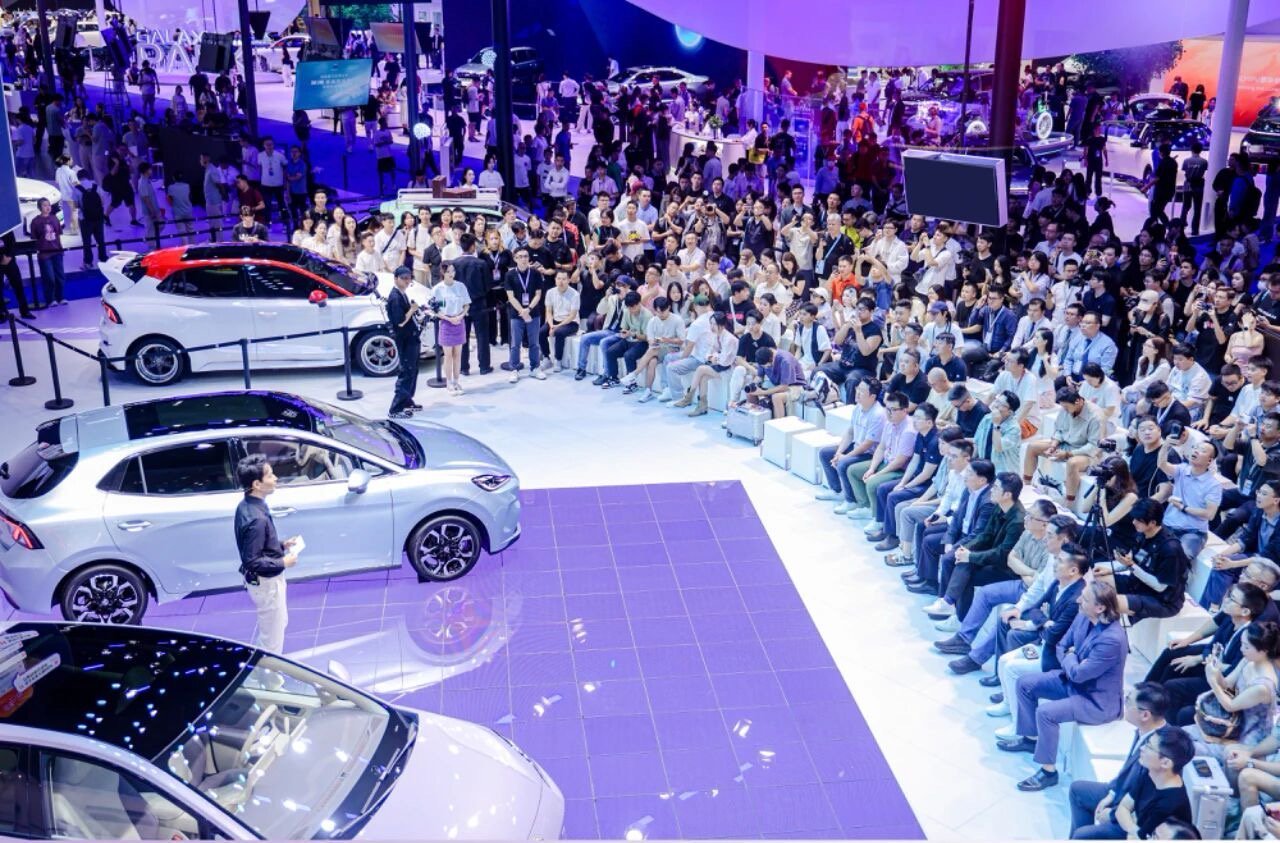
Despite the industry's long-standing anticipation for all-solid-state batteries, their commercialization has consistently followed a path—from easier challenges to more complex ones. In this context, semi-solid-state batteries, as a crucial transitional technology, are now poised to take the lead in entering a new phase of large-scale application. At the Chengdu Auto Show on August 29, SAIC’s brand-new MG4—equipped with the first-ever semi-solid-state battery—was officially launched, with a starting price of just 65,800 yuan. This makes it the first vehicle featuring a semi-solid-state battery that breaks through the 100,000-yuan price barrier. Reportedly, thanks to innovative advancements in underlying material technologies, the battery’s liquid electrolyte content has been reduced to an impressive 5%, bringing it remarkably close to the level of quasi-solid-state batteries—and effectively addressing the critical issue of battery thermal runaway. Industry insiders suggest that by introducing this cutting-edge technology into the 100,000-yuan electric vehicle segment, SAIC’s MG4 is ushering in an era of "inclusive" access to semi-solid-state battery technology, potentially reshaping the rules of the game in the new-energy vehicle industry.
The market's pioneering adoption has also paved the way for more cutting-edge technology pathways. In September, Farasis Energy disclosed on its investor interaction platform the progress in R&D and industrialization of its third-generation semi-solid-state batteries, clearly stating that the product is slated for official mass production by 2026. Notably, Farasis Energy’s latest breakthrough focuses on a dual approach—integrating "solid electrolyte applications" with "in-situ solidification technology." This innovation not only boosts the energy density of pouch cells to 400Wh/kg but also lays a critical foundation for the commercialization of high-safety, high-energy-density batteries by reducing electrolyte usage and incorporating solid-state materials. As a result, it’s propelling domestic semi-solid-state battery technology from the lab into large-scale real-world applications. As Yang Hongxin, Chairman of Svolt Energy, pointed out, semi-solid-state batteries have emerged as a relatively independent yet widely applicable technology route, making them a central battleground in today’s industry competition. He emphasized that, beyond significantly enhancing safety, these batteries can also improve manufacturing yields and optimize overall quality performance throughout their entire lifecycle.
It is reported that, in the field of semi-solid-state batteries, Svolt Energy's self-developed "Electrolyte Thermal Composite Transfer Process" has successfully overcome several key technical bottlenecks in mass production. This innovative process leverages a polarity-altered adhesive formulation and conformal gradient hot-pressing technology, enabling highly efficient and uniform transfer of the electrolyte layer—from the separator directly onto the electrode sheet—with a transfer rate soaring dramatically from an initial approximately 20% to over 95%. Notably, this technology is fully compatible with existing production lines, eliminating the need for additional equipment investments, while also delivering significant improvements in processing accuracy, yield rates, and safety: HIPOT yield has increased by 10%, pressure differential defect rates have dropped by 6%, and overall safety performance has improved by 50%. Currently, Svolt Energy remains committed to its industrialization roadmap of "first semi-solid-state, then all-solid-state," carefully balancing technological maturity with market acceptance, as it steadily advances the commercial deployment of solid-state battery technology.
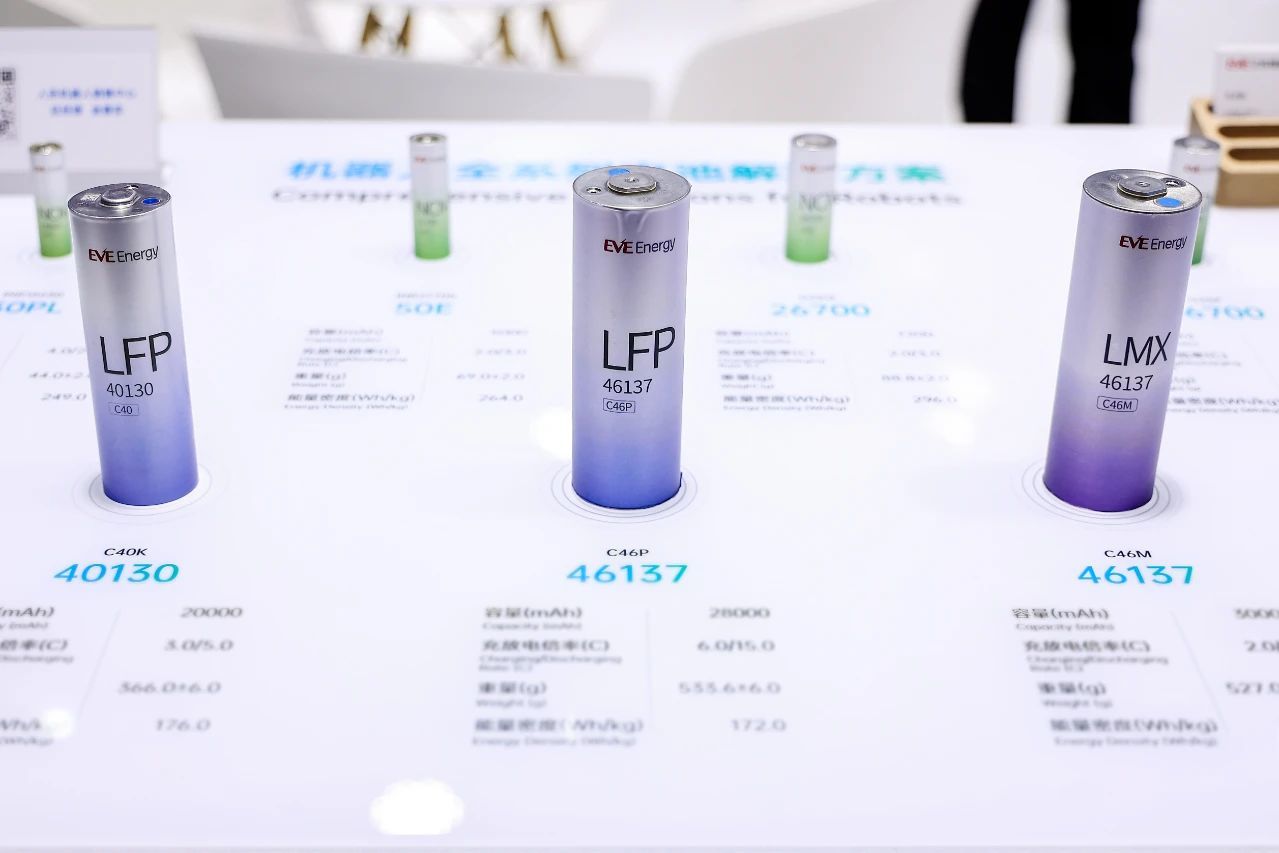
According to the officially released plan, Svolt Energy will complete the development of its 10Ah-class, 400Wh/kg all-solid-state battery system by the end of 2025. In 2026, the company will begin ramping up production of its first-generation semi-solid-state batteries, while simultaneously advancing the development of a second-generation 400Wh/kg semi-solid-state battery. By 2028, Svolt plans to launch its third-generation 450Wh/kg semi-solid-state battery and, in the same year, aims to develop a pure solid-state battery capable of delivering over 70Ah with an energy density of 500Wh/kg. While the entire industry remains focused on new-energy vehicles, the application scenarios for solid-state batteries are quietly expanding—emerging as a new frontier where battery companies are eagerly positioning themselves, particularly in the rapidly growing fields of humanoid robots and the low-altitude economy. With "embodied intelligence" and "intelligent robotics" now prominently featured in this year's Government Work Report, humanoid robots have become a hot topic in the tech world, and 2025 is already being hailed as the "year zero" for mass production of these advanced machines. However, as the "power heart" that determines their mobility, high-performance power batteries remain the key bottleneck currently hindering the development of humanoid robots. At a recent forum, Feng Yanqiang, Chief Engineer of Evey Lithium Energy's robot battery division, bluntly stated: "Currently, the biggest challenge facing humanoid robots in the industry is insufficient battery life—this is also one of the industry's most pressing pain points." To tackle this challenge, Evey Lithium Energy showcased its "Dense Energy Solutions," presenting a comprehensive range of battery solutions tailored specifically for robotics applications, at the 2025 World Robot Conference. Just last September, the company officially inaugurated its Chengdu-based mass-production facility dedicated to solid-state battery research, marking a significant milestone with the successful rollout of the "Longquan No. 2" all-solid-state battery. This newly produced "Longquan No. 2" boasts an impressive energy density of 300Wh/kg and a volumetric energy density of 700Wh/L, making it ideally suited for cutting-edge applications such as humanoid robots, low-altitude aerial vehicles, and AI-powered high-end equipment.
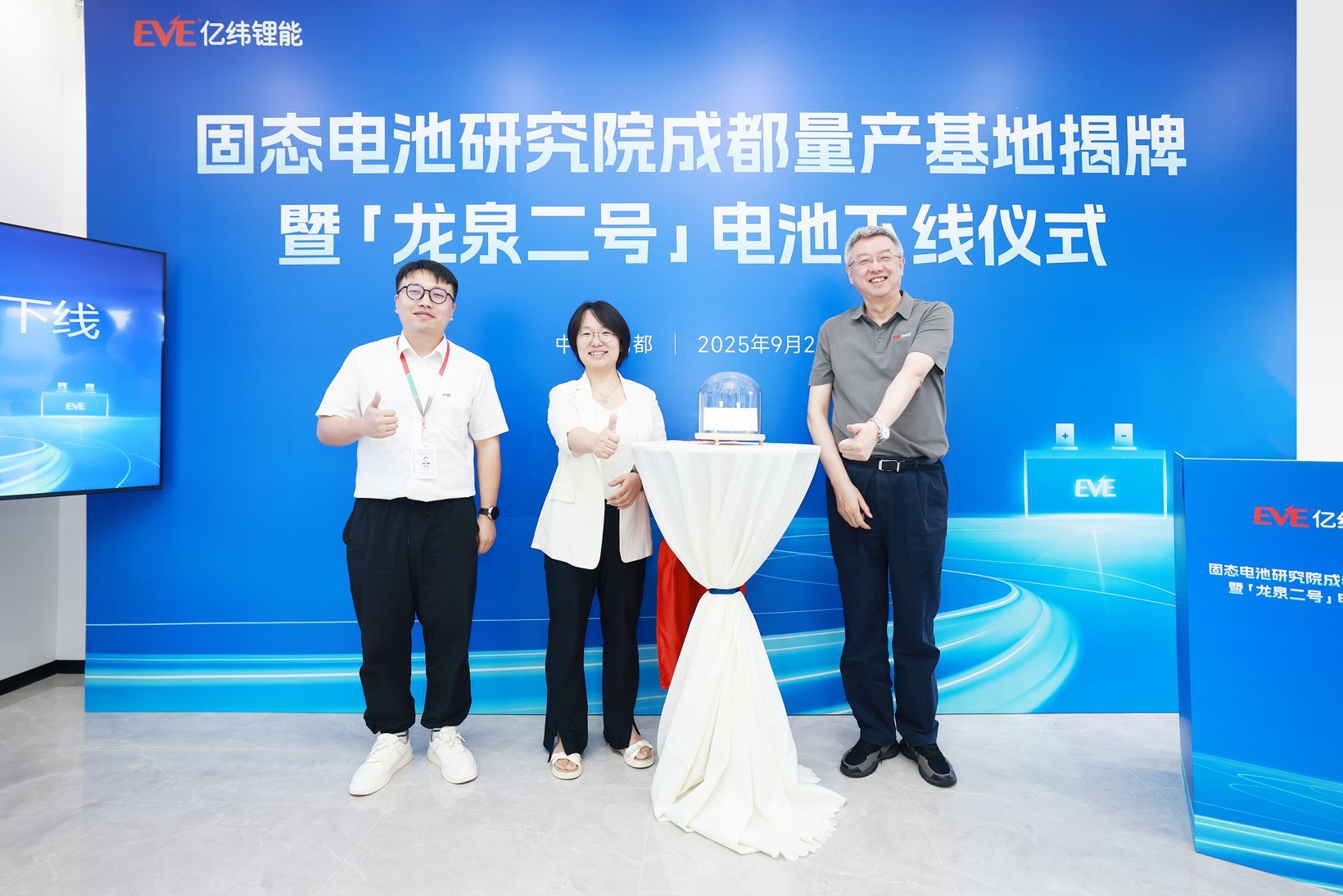
According to official disclosures from EVE Energy, the solid-state battery base spans a total area of approximately 11,000 square meters and, once fully operational, will have an annual production capacity of nearly 500,000 battery cells. The base is being constructed in two phases: Phase I is set to be completed by December 2025, featuring a manufacturing capability for 60Ah batteries; Phase II is scheduled for completion by December 2026, delivering an annual production capacity of 100 MWh. In addition, EVE Energy has already established a deep collaboration with Vitar Power on robotics business. The two companies will work closely together, leveraging both user needs and the latest trends in robotic power battery technology, to further advance the mass production of embodied intelligent products. Together, they are jointly developing higher-density battery packs that promise a 30% increase in energy capacity, enabling outdoor续航 (endurance) of more than 6 hours—sufficient to meet the demands of a full day's usage. Beyond the new-energy vehicle sector, EVE Energy is also actively expanding into emerging fields such as the low-altitude economy and robotics, having already reached cooperation agreements with several automakers and aircraft manufacturers.
It is reported that Svolt Energy has already established a dedicated production line for semi-solid-state batteries with an annual capacity of 2.3 GWh, and has completed the development of its first-generation 270 Wh/kg square battery cells. The company plans to begin mass trial production of C-samples in November 2025. This product has already secured orders from well-known European electric vehicle brands and has successfully been selected as the supplier for a central state-owned enterprise's eVTOL project. Meanwhile, Svolt Energy is actively developing soft-pack semi-solid-state batteries aimed at achieving an energy density of up to 360 Wh/kg for mass production. The company has officially delivered samples to a leading central state-owned enterprise specializing in low-altitude aircraft, with plans for the prototype to make its maiden flight later this year. Recently, Ganfeng Lithium also revealed on its investor interaction platform that the company’s solid-state batteries have already been tested and integrated into select vehicle models, with full-scale production underway. Additionally, the company has made significant progress in fields such as drones and consumer electronics. Industry insiders believe that China is demonstrating a pioneering edge in emerging sectors like the low-altitude economy and humanoid robotics. By leveraging semi-solid-state batteries as a key industrial breakthrough—positioned as a "bridgehead" for mid-term strategic advancement—Chinese enterprises are determined to take the lead in capturing high-end and rapidly growing markets.
Yang Hongxin further stated that, considering the maturity distribution of products, emerging fields such as the low-altitude economy and humanoid robots are poised to become the pioneering scenarios for the true commercial application of solid-state batteries. Since 2025, the solid-state battery industry has witnessed a flurry of favorable government policies. Earlier, on September 22, the National Energy Administration, the Ministry of Industry and Information Technology, the State-owned Assets Supervision and Administration Commission of the State Council, and the State Administration for Market Regulation jointly released the "Guiding Opinions on Promoting High-Quality Development of Energy Equipment," explicitly emphasizing the development of "key equipment for long-life, wide-temperature-range, and low-decay lithium batteries, sodium batteries, and solid-state batteries." Meanwhile, Wu Guogang, a second-level inspector at the Electronic Information Department of the Ministry of Industry and Information Technology, publicly remarked in September that the next step will be to strengthen innovation leadership in lithium-battery technology, accelerate the deployment of forward-looking technologies, and expedite the research, development, and industrialization of solid-state batteries, sodium-ion batteries, all-climate batteries, fast-charging batteries, as well as their core materials.
"In fact, the industry has gradually reached a consensus on the progress toward mass production of solid-state batteries. 'Since this year, at least from the perspective of the capital markets, everyone has essentially formed a unified view on the overall industrialization trend of solid-state batteries. At the heart of this consensus is the expectation that, over the next three to five years, China will become the country leading the world in accelerating the commercialization of solid-state battery technology—both in terms of technological maturity and the completeness of its related industrial ecosystem,' recently stated Zeng Tao, Executive General Manager of the China Galaxy Securities Research Institute and Chief Analyst for Power Equipment & New Energy."
From the perspective of industry experts, all-solid-state batteries currently still face significant challenges in achieving mass production, with numerous technical hurdles that urgently need to be overcome. However, once these breakthroughs are realized, their inherent safety features and unparalleled potential for ultra-high energy density will undoubtedly make them the ultimate technology choice for both power batteries and energy storage systems. According to Morgan Stanley's forecast, by 2030, the global market size for solid-state batteries is expected to reach US$120 billion, with China accounting for an estimated 40% of this market. As a result, capacity expansion efforts are accelerating across the board. Meanwhile, a research report from CITIC Securities highlights that since 2025, battery companies such as SolidPower and Guoxuan High-Tech have gradually begun conducting vehicle-mounted road tests of their all-solid-state batteries, signaling that a wave of intensive on-road testing for these cutting-edge batteries is set to unfold between 2025 and 2026.
As the global leader in power battery companies, Ningde Times' spokesperson highlighted the progress of solid-state batteries during the company's recent earnings conference. Ningde Times believes that the fundamental scientific challenges surrounding solid-state batteries have largely been resolved, though the technology currently faces significant engineering hurdles. The company anticipates small-scale mass production of solid-state batteries by 2027, with large-scale commercial applications expected to take hold by 2030. It’s worth noting that current all-solid-state battery technologies still encounter interface issues and manufacturing process difficulties. Moreover, the cost of all-solid-state batteries remains substantially higher than that of their liquid-electrolyte counterparts—so much so that even two or three years down the line, a price gap of 5 to 10 times is still anticipated. As such, achieving cost-effective mass production while keeping material costs under control remains the core challenge for industrialization. CITIC Securities also pointed out that the primary obstacles to integrating all-solid-state batteries into vehicles include battery swelling and degradation of cycle life. However, automakers and battery manufacturers share a consensus: these issues can be mitigated through advancements in solid-solid interfaces and by applying external pressure at the vehicle level. "Whether it's a liquid or solid-state battery, both fundamentally fall under the lithium-ion battery category," said Yang Hongxin. He added that after decades of development, some segments of the industry have already reached maturity, while others are shifting from policy-driven growth to market-driven innovation. Meanwhile, emerging application areas—such as the low-altitude economy and humanoid robotics—are rapidly gaining traction. Looking ahead, the scope of lithium-ion battery applications continues to expand, with potential future uses spanning aerospace, deep-sea exploration, and beyond.
Currently, the technological approaches for solid-state batteries are showing a diversified landscape. In terms of electrolyte types, they are mainly categorized into polymers, oxides, sulfides, and, more recently, halides, which have garnered significant attention. Among the major industry players, however, sulfide-based electrolytes have emerged as the clear frontrunner. In fact, every step forward in bringing solid-state batteries toward commercialization is closely watched by the market. As the industry continues to accelerate its development, several publicly listed companies have already announced their strategic moves within the solid-state battery value chain. Equipment manufacturers, positioned upstream in the supply chain, are among the first to reap the benefits of this burgeoning sector. For instance, in June of this year, Lead Intelligent Machinery announced the delivery of multiple sets of core equipment for solid-state batteries—including advanced composite transfer systems and high-speed stacking machines—to a globally leading battery manufacturer. Earlier that month, the company had successfully completed the full-scale production line for all-solid-state batteries, delivering the world's first pilot-scale production line for such technology. Meanwhile, Winhe Technology also revealed around the same time that its solid-state wet-coating, roll-pressing, and electrolyte-transfer equipment—designed specifically for domestic customers—had arrived smoothly at the sites of key battery firms. These advanced systems are reportedly being utilized in the construction of pilot production lines at the customers' local facilities.
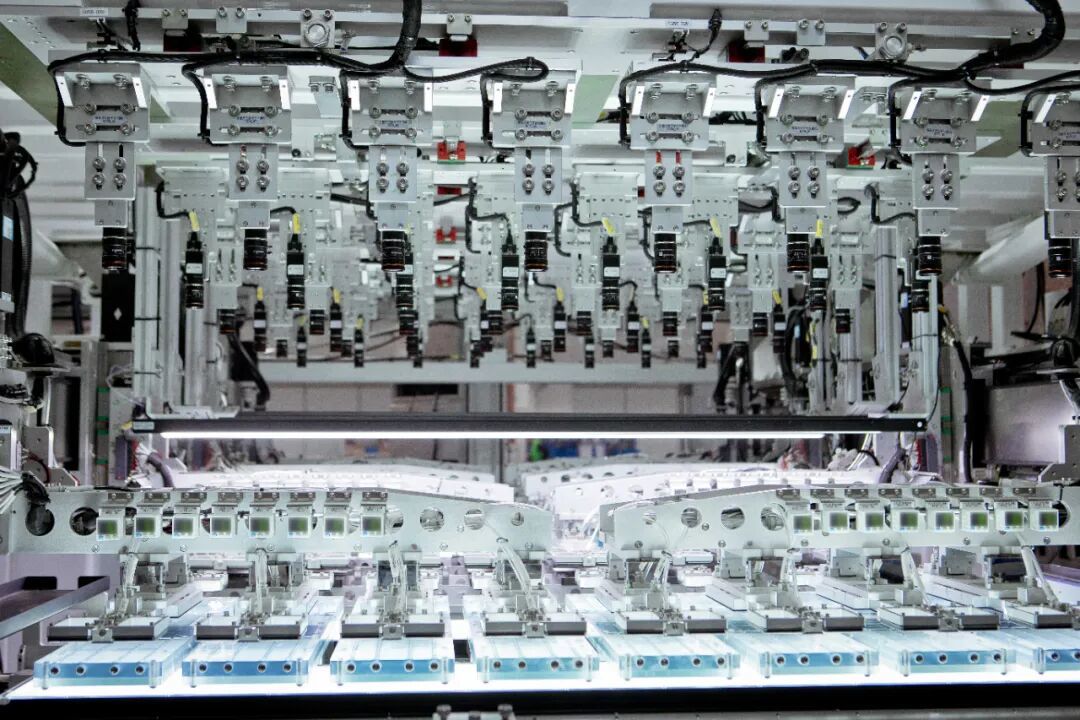
On September 23, Hymson released its investor relations activity record, announcing that the company was among the first in the industry to successfully implement the "oxide + lithium-metal anode" technology roadmap and has completed the commercial closed-loop development of lithium-metal solid-state battery systems—specifically, solid-state battery equipment tailored for use in low-altitude aircraft. Currently, the lithium-metal solid-state battery equipment is already being delivered in bulk. Meanwhile, on the "sulfide + silicon-carbon anode" technology path, the company has also secured pilot-line orders from several globally leading new-energy technology firms. At present, the company is actively collaborating with domestic companies C and B on key processes related to solid-state batteries. However, some industry insiders have pointed out that recently, several lithium-battery equipment companies have seen their stock prices soar, accompanied by the introduction of so-called "complete solid-state battery production equipment sets." In reality, though, the underlying technologies and equipment remain far from mature, leaving a significant gap before these solutions can truly be scaled up for mass production.
Undeniably, driven by the dual forces of policy and technology, the pace of solid-state battery industrialization is accelerating. Overall, China's leading battery companies have largely finalized their technological roadmaps for solid-state batteries and are steadily advancing toward mass production and commercialization. With collaborative efforts across the industry chain, emerging application areas are now emerging as a key engine propelling the commercialization of solid-state batteries. As Yang Hongxin has called for, the industry should join hands to jointly build a "new ecosystem" for China's solid-state batteries, "contributing Chinese solutions and wisdom to the global automotive industry's green transformation."
Conclusion: The race for solid-state batteries has long gone beyond the mere pursuit of energy density—it has evolved into a strategic battle for dominance in future industries. From high-speed highways to vast skies, and even into the smart robots that are already becoming part of our daily lives, the relentless demand for unparalleled safety and performance is driving battery technology to undergo a profound transformation. Currently, the early adoption of semi-solid-state batteries has established a robust "bridgehead" for industrialization, while the ultimate goal of all-solid-state technology continues to push the entire industry toward unprecedented breakthroughs.
Although this path to advancement is fraught with technical and cost challenges, the rewards it brings are nothing short of transformative. Solid-state batteries are poised to become the indispensable "energy cornerstone" that will power the intelligent, low-altitude society of the 21st century. This quiet energy revolution tests not only the technological resilience of individual companies but also a nation's vision and determination within its high-tech industrial ecosystem. Ultimately, whoever takes the lead in scaling up solid-state battery production will hold the golden ticket to the next wave of industrial transformation. (This article is from Gasgoo.)
Translated from Sina Auto
Previous post:
Solid-state battery mass production is no longer just waiting for the automotive industry.
2025-09-28
Solid-state battery mass production is no longer just waiting for the automotive industry.
As the next-generation power battery technology, solid-state batteries have consistently remained the focal point of both capital and industry attention. For a long time, consumers have eagerly awaited the day when solid-state batteries make their way into mass-produced new-energy vehicles. However, as of now, the majority of commercialized applications in the NEV sector still rely on semi-solid-state batteries. Nevertheless, the commercialization journey of solid-state batteries is far from over. According to Gasgoo Automotive, a fresh chapter for solid-state batteries is quietly unfolding—shifting toward more promising emerging fields with significant growth potential, such as the low-altitude economy and humanoid robotics. Currently, numerous companies have already achieved notable technological breakthroughs in these cutting-edge areas and are securing customer orders.
Despite the industry's long-standing anticipation for all-solid-state batteries, their commercialization has consistently followed a path—from easier challenges to more complex ones. In this context, semi-solid-state batteries, as a crucial transitional technology, are now poised to take the lead in entering a new phase of large-scale application. At the Chengdu Auto Show on August 29, SAIC’s brand-new MG4—equipped with the first-ever semi-solid-state battery—was officially launched, with a starting price of just 65,800 yuan. This makes it the first vehicle featuring a semi-solid-state battery that breaks through the 100,000-yuan price barrier. Reportedly, thanks to innovative advancements in underlying material technologies, the battery’s liquid electrolyte content has been reduced to an impressive 5%, bringing it remarkably close to the level of quasi-solid-state batteries—and effectively addressing the critical issue of battery thermal runaway. Industry insiders suggest that by introducing this cutting-edge technology into the 100,000-yuan electric vehicle segment, SAIC’s MG4 is ushering in an era of "inclusive" access to semi-solid-state battery technology, potentially reshaping the rules of the game in the new-energy vehicle industry.
The market's pioneering adoption has also paved the way for more cutting-edge technology pathways. In September, Farasis Energy disclosed on its investor interaction platform the progress in R&D and industrialization of its third-generation semi-solid-state batteries, clearly stating that the product is slated for official mass production by 2026. Notably, Farasis Energy’s latest breakthrough focuses on a dual approach—integrating "solid electrolyte applications" with "in-situ solidification technology." This innovation not only boosts the energy density of pouch cells to 400Wh/kg but also lays a critical foundation for the commercialization of high-safety, high-energy-density batteries by reducing electrolyte usage and incorporating solid-state materials. As a result, it’s propelling domestic semi-solid-state battery technology from the lab into large-scale real-world applications. As Yang Hongxin, Chairman of Svolt Energy, pointed out, semi-solid-state batteries have emerged as a relatively independent yet widely applicable technology route, making them a central battleground in today’s industry competition. He emphasized that, beyond significantly enhancing safety, these batteries can also improve manufacturing yields and optimize overall quality performance throughout their entire lifecycle.
It is reported that, in the field of semi-solid-state batteries, Svolt Energy's self-developed "Electrolyte Thermal Composite Transfer Process" has successfully overcome several key technical bottlenecks in mass production. This innovative process leverages a polarity-altered adhesive formulation and conformal gradient hot-pressing technology, enabling highly efficient and uniform transfer of the electrolyte layer—from the separator directly onto the electrode sheet—with a transfer rate soaring dramatically from an initial approximately 20% to over 95%. Notably, this technology is fully compatible with existing production lines, eliminating the need for additional equipment investments, while also delivering significant improvements in processing accuracy, yield rates, and safety: HIPOT yield has increased by 10%, pressure differential defect rates have dropped by 6%, and overall safety performance has improved by 50%. Currently, Svolt Energy remains committed to its industrialization roadmap of "first semi-solid-state, then all-solid-state," carefully balancing technological maturity with market acceptance, as it steadily advances the commercial deployment of solid-state battery technology.
According to the officially released plan, Svolt Energy will complete the development of its 10Ah-class, 400Wh/kg all-solid-state battery system by the end of 2025. In 2026, the company will begin ramping up production of its first-generation semi-solid-state batteries, while simultaneously advancing the development of a second-generation 400Wh/kg semi-solid-state battery. By 2028, Svolt plans to launch its third-generation 450Wh/kg semi-solid-state battery and, in the same year, aims to develop a pure solid-state battery capable of delivering over 70Ah with an energy density of 500Wh/kg. While the entire industry remains focused on new-energy vehicles, the application scenarios for solid-state batteries are quietly expanding—emerging as a new frontier where battery companies are eagerly positioning themselves, particularly in the rapidly growing fields of humanoid robots and the low-altitude economy. With "embodied intelligence" and "intelligent robotics" now prominently featured in this year's Government Work Report, humanoid robots have become a hot topic in the tech world, and 2025 is already being hailed as the "year zero" for mass production of these advanced machines. However, as the "power heart" that determines their mobility, high-performance power batteries remain the key bottleneck currently hindering the development of humanoid robots. At a recent forum, Feng Yanqiang, Chief Engineer of Evey Lithium Energy's robot battery division, bluntly stated: "Currently, the biggest challenge facing humanoid robots in the industry is insufficient battery life—this is also one of the industry's most pressing pain points." To tackle this challenge, Evey Lithium Energy showcased its "Dense Energy Solutions," presenting a comprehensive range of battery solutions tailored specifically for robotics applications, at the 2025 World Robot Conference. Just last September, the company officially inaugurated its Chengdu-based mass-production facility dedicated to solid-state battery research, marking a significant milestone with the successful rollout of the "Longquan No. 2" all-solid-state battery. This newly produced "Longquan No. 2" boasts an impressive energy density of 300Wh/kg and a volumetric energy density of 700Wh/L, making it ideally suited for cutting-edge applications such as humanoid robots, low-altitude aerial vehicles, and AI-powered high-end equipment.
According to official disclosures from EVE Energy, the solid-state battery base spans a total area of approximately 11,000 square meters and, once fully operational, will have an annual production capacity of nearly 500,000 battery cells. The base is being constructed in two phases: Phase I is set to be completed by December 2025, featuring a manufacturing capability for 60Ah batteries; Phase II is scheduled for completion by December 2026, delivering an annual production capacity of 100 MWh. In addition, EVE Energy has already established a deep collaboration with Vitar Power on robotics business. The two companies will work closely together, leveraging both user needs and the latest trends in robotic power battery technology, to further advance the mass production of embodied intelligent products. Together, they are jointly developing higher-density battery packs that promise a 30% increase in energy capacity, enabling outdoor续航 (endurance) of more than 6 hours—sufficient to meet the demands of a full day's usage. Beyond the new-energy vehicle sector, EVE Energy is also actively expanding into emerging fields such as the low-altitude economy and robotics, having already reached cooperation agreements with several automakers and aircraft manufacturers.
It is reported that Svolt Energy has already established a dedicated production line for semi-solid-state batteries with an annual capacity of 2.3 GWh, and has completed the development of its first-generation 270 Wh/kg square battery cells. The company plans to begin mass trial production of C-samples in November 2025. This product has already secured orders from well-known European electric vehicle brands and has successfully been selected as the supplier for a central state-owned enterprise's eVTOL project. Meanwhile, Svolt Energy is actively developing soft-pack semi-solid-state batteries aimed at achieving an energy density of up to 360 Wh/kg for mass production. The company has officially delivered samples to a leading central state-owned enterprise specializing in low-altitude aircraft, with plans for the prototype to make its maiden flight later this year. Recently, Ganfeng Lithium also revealed on its investor interaction platform that the company’s solid-state batteries have already been tested and integrated into select vehicle models, with full-scale production underway. Additionally, the company has made significant progress in fields such as drones and consumer electronics. Industry insiders believe that China is demonstrating a pioneering edge in emerging sectors like the low-altitude economy and humanoid robotics. By leveraging semi-solid-state batteries as a key industrial breakthrough—positioned as a "bridgehead" for mid-term strategic advancement—Chinese enterprises are determined to take the lead in capturing high-end and rapidly growing markets.
Yang Hongxin further stated that, considering the maturity distribution of products, emerging fields such as the low-altitude economy and humanoid robots are poised to become the pioneering scenarios for the true commercial application of solid-state batteries. Since 2025, the solid-state battery industry has witnessed a flurry of favorable government policies. Earlier, on September 22, the National Energy Administration, the Ministry of Industry and Information Technology, the State-owned Assets Supervision and Administration Commission of the State Council, and the State Administration for Market Regulation jointly released the "Guiding Opinions on Promoting High-Quality Development of Energy Equipment," explicitly emphasizing the development of "key equipment for long-life, wide-temperature-range, and low-decay lithium batteries, sodium batteries, and solid-state batteries." Meanwhile, Wu Guogang, a second-level inspector at the Electronic Information Department of the Ministry of Industry and Information Technology, publicly remarked in September that the next step will be to strengthen innovation leadership in lithium-battery technology, accelerate the deployment of forward-looking technologies, and expedite the research, development, and industrialization of solid-state batteries, sodium-ion batteries, all-climate batteries, fast-charging batteries, as well as their core materials.
"In fact, the industry has gradually reached a consensus on the progress toward mass production of solid-state batteries. 'Since this year, at least from the perspective of the capital markets, everyone has essentially formed a unified view on the overall industrialization trend of solid-state batteries. At the heart of this consensus is the expectation that, over the next three to five years, China will become the country leading the world in accelerating the commercialization of solid-state battery technology—both in terms of technological maturity and the completeness of its related industrial ecosystem,' recently stated Zeng Tao, Executive General Manager of the China Galaxy Securities Research Institute and Chief Analyst for Power Equipment & New Energy."
From the perspective of industry experts, all-solid-state batteries currently still face significant challenges in achieving mass production, with numerous technical hurdles that urgently need to be overcome. However, once these breakthroughs are realized, their inherent safety features and unparalleled potential for ultra-high energy density will undoubtedly make them the ultimate technology choice for both power batteries and energy storage systems. According to Morgan Stanley's forecast, by 2030, the global market size for solid-state batteries is expected to reach US$120 billion, with China accounting for an estimated 40% of this market. As a result, capacity expansion efforts are accelerating across the board. Meanwhile, a research report from CITIC Securities highlights that since 2025, battery companies such as SolidPower and Guoxuan High-Tech have gradually begun conducting vehicle-mounted road tests of their all-solid-state batteries, signaling that a wave of intensive on-road testing for these cutting-edge batteries is set to unfold between 2025 and 2026.
As the global leader in power battery companies, Ningde Times' spokesperson highlighted the progress of solid-state batteries during the company's recent earnings conference. Ningde Times believes that the fundamental scientific challenges surrounding solid-state batteries have largely been resolved, though the technology currently faces significant engineering hurdles. The company anticipates small-scale mass production of solid-state batteries by 2027, with large-scale commercial applications expected to take hold by 2030. It’s worth noting that current all-solid-state battery technologies still encounter interface issues and manufacturing process difficulties. Moreover, the cost of all-solid-state batteries remains substantially higher than that of their liquid-electrolyte counterparts—so much so that even two or three years down the line, a price gap of 5 to 10 times is still anticipated. As such, achieving cost-effective mass production while keeping material costs under control remains the core challenge for industrialization. CITIC Securities also pointed out that the primary obstacles to integrating all-solid-state batteries into vehicles include battery swelling and degradation of cycle life. However, automakers and battery manufacturers share a consensus: these issues can be mitigated through advancements in solid-solid interfaces and by applying external pressure at the vehicle level. "Whether it's a liquid or solid-state battery, both fundamentally fall under the lithium-ion battery category," said Yang Hongxin. He added that after decades of development, some segments of the industry have already reached maturity, while others are shifting from policy-driven growth to market-driven innovation. Meanwhile, emerging application areas—such as the low-altitude economy and humanoid robotics—are rapidly gaining traction. Looking ahead, the scope of lithium-ion battery applications continues to expand, with potential future uses spanning aerospace, deep-sea exploration, and beyond.
Currently, the technological approaches for solid-state batteries are showing a diversified landscape. In terms of electrolyte types, they are mainly categorized into polymers, oxides, sulfides, and, more recently, halides, which have garnered significant attention. Among the major industry players, however, sulfide-based electrolytes have emerged as the clear frontrunner. In fact, every step forward in bringing solid-state batteries toward commercialization is closely watched by the market. As the industry continues to accelerate its development, several publicly listed companies have already announced their strategic moves within the solid-state battery value chain. Equipment manufacturers, positioned upstream in the supply chain, are among the first to reap the benefits of this burgeoning sector. For instance, in June of this year, Lead Intelligent Machinery announced the delivery of multiple sets of core equipment for solid-state batteries—including advanced composite transfer systems and high-speed stacking machines—to a globally leading battery manufacturer. Earlier that month, the company had successfully completed the full-scale production line for all-solid-state batteries, delivering the world's first pilot-scale production line for such technology. Meanwhile, Winhe Technology also revealed around the same time that its solid-state wet-coating, roll-pressing, and electrolyte-transfer equipment—designed specifically for domestic customers—had arrived smoothly at the sites of key battery firms. These advanced systems are reportedly being utilized in the construction of pilot production lines at the customers' local facilities.
On September 23, Hymson released its investor relations activity record, announcing that the company was among the first in the industry to successfully implement the "oxide + lithium-metal anode" technology roadmap and has completed the commercial closed-loop development of lithium-metal solid-state battery systems—specifically, solid-state battery equipment tailored for use in low-altitude aircraft. Currently, the lithium-metal solid-state battery equipment is already being delivered in bulk. Meanwhile, on the "sulfide + silicon-carbon anode" technology path, the company has also secured pilot-line orders from several globally leading new-energy technology firms. At present, the company is actively collaborating with domestic companies C and B on key processes related to solid-state batteries. However, some industry insiders have pointed out that recently, several lithium-battery equipment companies have seen their stock prices soar, accompanied by the introduction of so-called "complete solid-state battery production equipment sets." In reality, though, the underlying technologies and equipment remain far from mature, leaving a significant gap before these solutions can truly be scaled up for mass production.
Undeniably, driven by the dual forces of policy and technology, the pace of solid-state battery industrialization is accelerating. Overall, China's leading battery companies have largely finalized their technological roadmaps for solid-state batteries and are steadily advancing toward mass production and commercialization. With collaborative efforts across the industry chain, emerging application areas are now emerging as a key engine propelling the commercialization of solid-state batteries. As Yang Hongxin has called for, the industry should join hands to jointly build a "new ecosystem" for China's solid-state batteries, "contributing Chinese solutions and wisdom to the global automotive industry's green transformation."
Conclusion: The race for solid-state batteries has long gone beyond the mere pursuit of energy density—it has evolved into a strategic battle for dominance in future industries. From high-speed highways to vast skies, and even into the smart robots that are already becoming part of our daily lives, the relentless demand for unparalleled safety and performance is driving battery technology to undergo a profound transformation. Currently, the early adoption of semi-solid-state batteries has established a robust "bridgehead" for industrialization, while the ultimate goal of all-solid-state technology continues to push the entire industry toward unprecedented breakthroughs.
Although this path to advancement is fraught with technical and cost challenges, the rewards it brings are nothing short of transformative. Solid-state batteries are poised to become the indispensable "energy cornerstone" that will power the intelligent, low-altitude society of the 21st century. This quiet energy revolution tests not only the technological resilience of individual companies but also a nation's vision and determination within its high-tech industrial ecosystem. Ultimately, whoever takes the lead in scaling up solid-state battery production will hold the golden ticket to the next wave of industrial transformation. (This article is from Gasgoo.)
Translated from Sina Auto
Previous post:

Contact us
Email:
info@adtfm.com
Phone:
021-20532053
Address:
2nd Floor, No. 150 Jindian Road, Pudong New Area, Shanghai

Phone:021-50790270
Email:info@adtfm.com
Website:www.adtfm.com
Address: Room 403, Building B, No. 115 Guiqiao Road, Pudong New Area, Shanghai


Leave a message for inquiry