
AI Accelerates: Painting a Picture of the Automotive Industry's Evolution
2025-02-28
AI Accelerates: Painting a Picture of the Automotive Industry's Evolution
Artificial intelligence is sparking a profound technological revolution in the automotive industry—transforming everything from safety features to production lines and reshaping the entire automotive landscape. Since its emergence after the 2025 Spring Festival, DeepSeek, boasting advantages such as high performance, cost-effectiveness, and open-source collaboration, has quickly made waves across the industry. To date, more than 20 automakers—including Geely, Avatr, Zeekr, Dongfeng, IM Motors, Great Wall, and Chery—have announced their plans to deeply integrate DeepSeek’s advanced large-scale model, enhancing the intelligent in-cabin language interaction capabilities of their automotive products.
However, in reality, AI's powerful technological capabilities are not limited to the intelligent cockpit—they also play a crucial role in areas such as the evolution of autonomous driving, optimization of production processes, and advanced supply chain management. At the same time, though, these advancements also give rise to new challenges, including data privacy concerns, algorithmic biases, and the complex issue of defining responsibility between humans and machines.
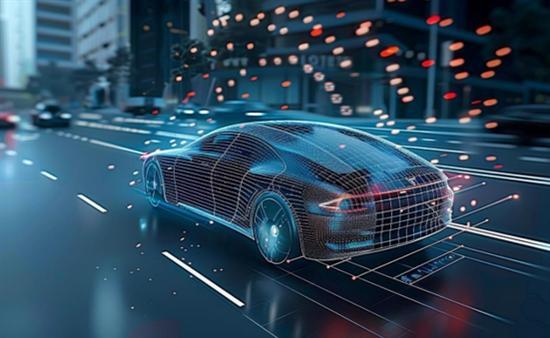
In the realm of virtual testing, AI is pioneering simulation systems that surpass traditional safety standards. Moritz Neukirchner, Senior Director of Strategic Product Management at global supplier Elektrobit, highlights that generative AI not only enables the creation of personalized experiences but also significantly accelerates the development process. Moreover, reinforcement learning technologies are proving particularly crucial in advancing ADAS (Advanced Driver Assistance Systems) and autonomous driving. The integration of generative AI and reinforcement learning has already entered the industrialization phase. NVIDIA’s DRIVE Sim simulation software, for instance, leverages the vast amounts of data it generates to train deep neural networks that form the core of autonomous vehicles’ perception systems. Collaborating with Mercedes-Benz on the "Digital Twin Munich" project, DRIVE Sim precisely replicates urban road features—including dynamic weather and lighting conditions—at a 1:1 scale. Additionally, it supports the generation of China-specific traffic scenarios, reducing the validation cycle for ADAS systems from 18 months to just 6 months.
As a cloud service provider integrating generative AI into autonomous driving, Huawei has built an "Extreme Weather Digital Lab" for Seres, simulating meteorological conditions such as freezing rain and dense fog to generate sophisticated behavioral models of various traffic participants—including predictive analyses of the collective "Chinese-style" pedestrian crossing behavior. This innovation has boosted algorithm iteration speed by 400%, enabling virtual testing to cover up to 5 million kilometers daily. Currently, AI is helping break through critical bottlenecks in the full-chain verification process—from MIL (Model-in-the-Loop) to DIL (Driver-in-the-Loop). According to a McKinsey report, by 2026, virtual testing will account for 90% of autonomous driving validation efforts, significantly reducing product launch cycles to just one-third of the time required under traditional methods. This "digital-first" R&D paradigm is reshaping the frontiers of automotive safety technology innovation. Meanwhile, AI is driving the centralized transformation of vehicle electronic architectures, laying a robust and reliable technological foundation for the era of software-defined vehicles. This shift toward centralized electronic architectures isn’t merely about hardware evolution—it represents a revolutionary leap in validation methodologies as well. By seamlessly integrating digital twins, AI-driven simulations, and cloud-native testing platforms, Huawei is empowering automakers to overcome the industry’s longstanding challenge of balancing "new and legacy systems."

In the real physical world, AI is reshaping every aspect of automobile manufacturing. Changan Automobile is leveraging 5G + AI vision to revamp its final assembly process. By integrating stereo cameras with AI-powered visual inspection technology, the company has achieved full-process automation for tasks such as glass primer application, adhesive coating, and component assembly. Robot positioning accuracy now reaches an impressive ±0.1mm, while assembly cycle times have been reduced by 30%. Importantly, this approach also eliminates inconsistencies in sealant application caused by manual operations. Additionally, Changan has established an advanced online AI-based quality-monitoring network, deploying 73 AI-powered visual inspection stations that cover 25 distinct scenarios—including thermal imaging for mold temperature monitoring and torque detection for bolt tightening. Thanks to real-time data collection at a rate of 1 million data points per second, combined with sophisticated deep-learning algorithms, the system has boosted its ability to detect quality defects, achieving an unprecedented defect detection rate of 99.97%.
The Ministry of Industry and Information Technology's 2025 White Paper on Intelligent Manufacturing reveals that automakers adopting AI to optimize assembly processes have seen an average reduction of 18% in manufacturing costs per vehicle model, while the time required to introduce new products has been shortened to just one-third of the traditional timeline. AI technology is driving transformative changes in automotive assembly across three key areas: precision in manufacturing processes, intelligent decision-making, and enhanced system flexibility. In terms of advancing smart supply chain practices, AI is also playing a pivotal role. Dongfeng Motor has implemented an intelligent logistics management system for complete vehicles, leveraging barcode technology to seamlessly track each vehicle—from production and warehousing to final delivery at dealerships. By employing AI algorithms, the system automatically generates optimal storage recommendations, ensuring that vehicles of the same model and color are grouped together efficiently. This approach has boosted space utilization to as high as 95%, eliminated the need for reverse maneuvers during outbound operations, and increased outbound efficiency by 40%. Ultimately, these innovations have led to an 80% improvement in storage space utilization and an overall 18% reduction in warehousing costs. Dongfeng Motor’s technological roadmap has been included as a recommended solution in the "China Automotive Intelligent Manufacturing White Paper."
In the real physical world, AI is reshaping every aspect of automobile manufacturing. Changan Automobile is leveraging 5G + AI vision to revamp its final assembly process. By integrating stereo cameras with AI-powered visual inspection technology, the company has achieved full-process automation for tasks such as glass primer application, adhesive coating, and component assembly. Robot positioning accuracy now reaches an impressive ±0.1mm, while assembly cycle times have been reduced by 30%. Importantly, this approach also eliminates inconsistencies in sealant application caused by manual operations. Additionally, Changan has established an advanced online AI-based quality-monitoring network, deploying 73 AI-powered visual inspection stations that cover 25 distinct scenarios—including thermal imaging for mold temperature monitoring and torque detection for bolt tightening. Thanks to real-time data collection at a rate of 1 million data points per second, combined with sophisticated deep-learning algorithms, the system has boosted its ability to detect quality defects, achieving an unprecedented defect detection rate of 99.97%.
The Ministry of Industry and Information Technology's 2025 White Paper on Intelligent Manufacturing reveals that automakers adopting AI to optimize assembly processes have seen an average reduction of 18% in manufacturing costs per vehicle model, while the time required to introduce new products has been shortened to just one-third of the traditional timeline. AI technology is driving transformative changes in automotive assembly across three key areas: precision in manufacturing processes, intelligent decision-making, and enhanced system flexibility. In terms of advancing smart supply chain practices, AI is also playing a pivotal role. Dongfeng Motor has implemented an intelligent logistics management system for complete vehicles, leveraging barcode technology to seamlessly track each vehicle—from production and warehousing to final delivery at dealerships. By employing AI algorithms, the system automatically generates optimal storage recommendations, ensuring that vehicles of the same model and color are grouped together efficiently. This approach has boosted space utilization to as high as 95%, eliminated the need for reverse maneuvers during outbound operations, and increased outbound efficiency by 40%. Ultimately, these innovations have led to an 80% improvement in storage space utilization and an overall 18% reduction in warehousing costs. Dongfeng Motor’s technological roadmap has been included as a recommended solution in the "China Automotive Intelligent Manufacturing White Paper."
Translated from Sina Auto
Previous post:
AI Accelerates: Painting a Picture of the Automotive Industry's Evolution
2025-02-28
AI Accelerates: Painting a Picture of the Automotive Industry's Evolution
Artificial intelligence is sparking a profound technological revolution in the automotive industry—transforming everything from safety features to production lines and reshaping the entire automotive landscape. Since its emergence after the 2025 Spring Festival, DeepSeek, boasting advantages such as high performance, cost-effectiveness, and open-source collaboration, has quickly made waves across the industry. To date, more than 20 automakers—including Geely, Avatr, Zeekr, Dongfeng, IM Motors, Great Wall, and Chery—have announced their plans to deeply integrate DeepSeek’s advanced large-scale model, enhancing the intelligent in-cabin language interaction capabilities of their automotive products.
However, in reality, AI's powerful technological capabilities are not limited to the intelligent cockpit—they also play a crucial role in areas such as the evolution of autonomous driving, optimization of production processes, and advanced supply chain management. At the same time, though, these advancements also give rise to new challenges, including data privacy concerns, algorithmic biases, and the complex issue of defining responsibility between humans and machines.
In the realm of virtual testing, AI is pioneering simulation systems that surpass traditional safety standards. Moritz Neukirchner, Senior Director of Strategic Product Management at global supplier Elektrobit, highlights that generative AI not only enables the creation of personalized experiences but also significantly accelerates the development process. Moreover, reinforcement learning technologies are proving particularly crucial in advancing ADAS (Advanced Driver Assistance Systems) and autonomous driving. The integration of generative AI and reinforcement learning has already entered the industrialization phase. NVIDIA’s DRIVE Sim simulation software, for instance, leverages the vast amounts of data it generates to train deep neural networks that form the core of autonomous vehicles’ perception systems. Collaborating with Mercedes-Benz on the "Digital Twin Munich" project, DRIVE Sim precisely replicates urban road features—including dynamic weather and lighting conditions—at a 1:1 scale. Additionally, it supports the generation of China-specific traffic scenarios, reducing the validation cycle for ADAS systems from 18 months to just 6 months.
As a cloud service provider integrating generative AI into autonomous driving, Huawei has built an "Extreme Weather Digital Lab" for Seres, simulating meteorological conditions such as freezing rain and dense fog to generate sophisticated behavioral models of various traffic participants—including predictive analyses of the collective "Chinese-style" pedestrian crossing behavior. This innovation has boosted algorithm iteration speed by 400%, enabling virtual testing to cover up to 5 million kilometers daily. Currently, AI is helping break through critical bottlenecks in the full-chain verification process—from MIL (Model-in-the-Loop) to DIL (Driver-in-the-Loop). According to a McKinsey report, by 2026, virtual testing will account for 90% of autonomous driving validation efforts, significantly reducing product launch cycles to just one-third of the time required under traditional methods. This "digital-first" R&D paradigm is reshaping the frontiers of automotive safety technology innovation. Meanwhile, AI is driving the centralized transformation of vehicle electronic architectures, laying a robust and reliable technological foundation for the era of software-defined vehicles. This shift toward centralized electronic architectures isn’t merely about hardware evolution—it represents a revolutionary leap in validation methodologies as well. By seamlessly integrating digital twins, AI-driven simulations, and cloud-native testing platforms, Huawei is empowering automakers to overcome the industry’s longstanding challenge of balancing "new and legacy systems."
In the real physical world, AI is reshaping every aspect of automobile manufacturing. Changan Automobile is leveraging 5G + AI vision to revamp its final assembly process. By integrating stereo cameras with AI-powered visual inspection technology, the company has achieved full-process automation for tasks such as glass primer application, adhesive coating, and component assembly. Robot positioning accuracy now reaches an impressive ±0.1mm, while assembly cycle times have been reduced by 30%. Importantly, this approach also eliminates inconsistencies in sealant application caused by manual operations. Additionally, Changan has established an advanced online AI-based quality-monitoring network, deploying 73 AI-powered visual inspection stations that cover 25 distinct scenarios—including thermal imaging for mold temperature monitoring and torque detection for bolt tightening. Thanks to real-time data collection at a rate of 1 million data points per second, combined with sophisticated deep-learning algorithms, the system has boosted its ability to detect quality defects, achieving an unprecedented defect detection rate of 99.97%.
The Ministry of Industry and Information Technology's 2025 White Paper on Intelligent Manufacturing reveals that automakers adopting AI to optimize assembly processes have seen an average reduction of 18% in manufacturing costs per vehicle model, while the time required to introduce new products has been shortened to just one-third of the traditional timeline. AI technology is driving transformative changes in automotive assembly across three key areas: precision in manufacturing processes, intelligent decision-making, and enhanced system flexibility. In terms of advancing smart supply chain practices, AI is also playing a pivotal role. Dongfeng Motor has implemented an intelligent logistics management system for complete vehicles, leveraging barcode technology to seamlessly track each vehicle—from production and warehousing to final delivery at dealerships. By employing AI algorithms, the system automatically generates optimal storage recommendations, ensuring that vehicles of the same model and color are grouped together efficiently. This approach has boosted space utilization to as high as 95%, eliminated the need for reverse maneuvers during outbound operations, and increased outbound efficiency by 40%. Ultimately, these innovations have led to an 80% improvement in storage space utilization and an overall 18% reduction in warehousing costs. Dongfeng Motor’s technological roadmap has been included as a recommended solution in the "China Automotive Intelligent Manufacturing White Paper."
In the real physical world, AI is reshaping every aspect of automobile manufacturing. Changan Automobile is leveraging 5G + AI vision to revamp its final assembly process. By integrating stereo cameras with AI-powered visual inspection technology, the company has achieved full-process automation for tasks such as glass primer application, adhesive coating, and component assembly. Robot positioning accuracy now reaches an impressive ±0.1mm, while assembly cycle times have been reduced by 30%. Importantly, this approach also eliminates inconsistencies in sealant application caused by manual operations. Additionally, Changan has established an advanced online AI-based quality-monitoring network, deploying 73 AI-powered visual inspection stations that cover 25 distinct scenarios—including thermal imaging for mold temperature monitoring and torque detection for bolt tightening. Thanks to real-time data collection at a rate of 1 million data points per second, combined with sophisticated deep-learning algorithms, the system has boosted its ability to detect quality defects, achieving an unprecedented defect detection rate of 99.97%.
The Ministry of Industry and Information Technology's 2025 White Paper on Intelligent Manufacturing reveals that automakers adopting AI to optimize assembly processes have seen an average reduction of 18% in manufacturing costs per vehicle model, while the time required to introduce new products has been shortened to just one-third of the traditional timeline. AI technology is driving transformative changes in automotive assembly across three key areas: precision in manufacturing processes, intelligent decision-making, and enhanced system flexibility. In terms of advancing smart supply chain practices, AI is also playing a pivotal role. Dongfeng Motor has implemented an intelligent logistics management system for complete vehicles, leveraging barcode technology to seamlessly track each vehicle—from production and warehousing to final delivery at dealerships. By employing AI algorithms, the system automatically generates optimal storage recommendations, ensuring that vehicles of the same model and color are grouped together efficiently. This approach has boosted space utilization to as high as 95%, eliminated the need for reverse maneuvers during outbound operations, and increased outbound efficiency by 40%. Ultimately, these innovations have led to an 80% improvement in storage space utilization and an overall 18% reduction in warehousing costs. Dongfeng Motor’s technological roadmap has been included as a recommended solution in the "China Automotive Intelligent Manufacturing White Paper."
Translated from Sina Auto
Previous post:

Contact us
Email:
info@adtfm.com
Phone:
021-20532053
Address:
2nd Floor, No. 150 Jindian Road, Pudong New Area, Shanghai

Phone:021-50790270
Email:info@adtfm.com
Website:www.adtfm.com
Address: Room 403, Building B, No. 115 Guiqiao Road, Pudong New Area, Shanghai


Leave a message for inquiry