
Lithium batteries will soon have "electronic IDs," breaking the "blind-box model" from production to recycling.
2025-06-06
Lithium batteries will soon have "electronic IDs," breaking the "blind-box model" from production to recycling.
As the lithium battery industry grows and develops, establishing a comprehensive lifecycle management and information traceability system, from production to recycling, has long been a major industry priority. Now, as my country's lithium batteries enter the terawatt-hour (TWh) era, this vision is becoming a reality. To strengthen safety and quality management throughout the entire lifecycle of lithium-ion batteries, the State Administration for Market Regulation (Standardization Administration of China) recently approved and issued the national standard "Lithium-ion Battery Coding Rules," which will take effect on November 1, 2025. This means that lithium batteries will evolve from "confused use" to "clear management," and their "electronic identity card" will usher in a traceable and transparent life for lithium batteries.
As a core engine of the global energy transition, China's lithium battery industry has accounted for over 70% of global production capacity for many consecutive years. According to statistics from the China Automotive Power Battery Industry Innovation Alliance, including all automotive power batteries and most energy storage batteries, my country's production and sales of lithium-ion batteries in 2024 will total 1,096.8 GWh and 1,039.5 GWh, respectively. Behind these impressive figures lies a systemic crisis: from electric two-wheelers catching fire in residential communities to electric vehicles spontaneously combusting after collisions, frequent lithium battery safety incidents have repeatedly irritated the public. Environmental risks and resource waste are becoming increasingly prominent in the trillion-yuan power battery recycling market.
It can be said that these issues have always been a "Sword of Damocles" hanging over the lithium battery industry. The industry's unbridled growth stems from a long-standing lack of regulatory oversight and traceability mechanisms. Now, with the industry experiencing a turnaround, these issues are becoming a thing of the past. With the arrival of the "TWh" era, lithium batteries are beginning to break free from the "blind box" model from production to recycling.
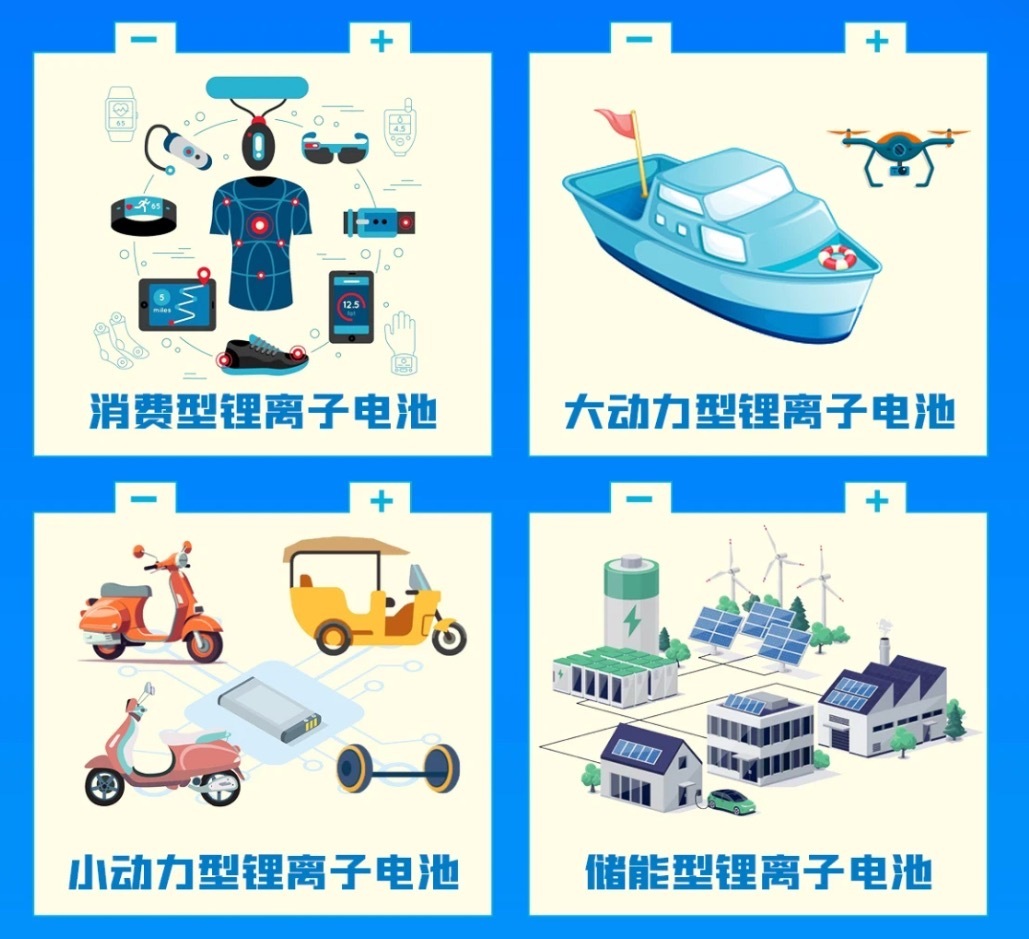
Gasgoo has learned that the national standard "Lithium-ion Battery Coding Rules," which will be implemented on November 1, 2025, assigns a unique identification code to each newly produced battery product. This applies to all product levels, from single cells to battery systems. This "one cell, one code" system enables full lifecycle control from production to recycling, providing an important reference for product traceability and industry regulation. Notably, the new rules cover consumer lithium-ion batteries, large-power lithium-ion batteries, small-power lithium-ion batteries, and energy storage lithium-ion batteries. Energy storage battery modules are coded "H," energy storage battery clusters are coded "J," and energy storage battery systems are coded "S."
Many industry experts believe this move is a significant sign of the standardization, standardization, and modernization of lithium battery production and use. Lithium battery identification codes may become a key pillar of China's national strategy to drive the lithium battery industry toward safety, digitalization, and green development. With lithium batteries equipped with an "electronic ID card," a simple scan will provide a comprehensive overview of their entire lifecycle. From an industry development perspective, this coding system may fundamentally change industry rules and make businesses more disciplined.
For consumers, scanning the code not only reveals the battery's past and present, but also provides an electronic evidence chain for rights protection. Precise coding traceability will significantly enhance quality control throughout the production process, completely eliminating the market for inferior batteries that rely on cutting corners. While this initiative will ensure product quality, it will also benefit other markets, such as the power battery recycling market. CITIC Securities estimates that by 2030, global recycling of retired batteries is expected to exceed 830 GWh, representing a market value exceeding 100 billion yuan. While the power battery recycling market is large, the difficulty in managing battery flow has always been a challenge for the industry. Now, compliant recycling companies with technological advantages, such as GEM and Brunp, are leveraging coding information to build a closed-loop system combining intelligent sorting and cascaded utilization. This will significantly squeeze the niche of individual recyclers, which rely on disorderly disassembly, and reshape the multi-billion-yuan recycling market.

Another example is facilitating the export of power batteries. The EU's new battery directive will fully implement a "battery passport" system, requiring all power batteries entering the EU market to be equipped with a unique digital identity covering their entire lifecycle, from raw material extraction and manufacturing to recycling and reuse. Faced with this "traceability revolution," Chinese companies' response strategies will determine their survival in the global high-end market. Therefore, the "traceable and recyclable" green label will become a passport to breaking down trade barriers like the EU's new battery directive. Gasgoo has learned that battery companies such as CATL, Sinotruk, and Guoxuan High-Tech have already begun deploying Industry 4.0, and their production systems are naturally suited to coding rules. These companies can combine traceability data with AI-powered quality inspection and intelligent production scheduling to further reduce costs and enhance quality barriers. Low-end production capacity with limited technical expertise and digital investment faces accelerated elimination due to rigid compliance costs. (Source: Gasgoo)
Reprinted from Sina Auto
Lithium batteries will soon have "electronic IDs," breaking the "blind-box model" from production to recycling.
2025-06-06
Lithium batteries will soon have "electronic IDs," breaking the "blind-box model" from production to recycling.
As the lithium battery industry grows and develops, establishing a comprehensive lifecycle management and information traceability system, from production to recycling, has long been a major industry priority. Now, as my country's lithium batteries enter the terawatt-hour (TWh) era, this vision is becoming a reality. To strengthen safety and quality management throughout the entire lifecycle of lithium-ion batteries, the State Administration for Market Regulation (Standardization Administration of China) recently approved and issued the national standard "Lithium-ion Battery Coding Rules," which will take effect on November 1, 2025. This means that lithium batteries will evolve from "confused use" to "clear management," and their "electronic identity card" will usher in a traceable and transparent life for lithium batteries.
As a core engine of the global energy transition, China's lithium battery industry has accounted for over 70% of global production capacity for many consecutive years. According to statistics from the China Automotive Power Battery Industry Innovation Alliance, including all automotive power batteries and most energy storage batteries, my country's production and sales of lithium-ion batteries in 2024 will total 1,096.8 GWh and 1,039.5 GWh, respectively. Behind these impressive figures lies a systemic crisis: from electric two-wheelers catching fire in residential communities to electric vehicles spontaneously combusting after collisions, frequent lithium battery safety incidents have repeatedly irritated the public. Environmental risks and resource waste are becoming increasingly prominent in the trillion-yuan power battery recycling market.
It can be said that these issues have always been a "Sword of Damocles" hanging over the lithium battery industry. The industry's unbridled growth stems from a long-standing lack of regulatory oversight and traceability mechanisms. Now, with the industry experiencing a turnaround, these issues are becoming a thing of the past. With the arrival of the "TWh" era, lithium batteries are beginning to break free from the "blind box" model from production to recycling.
Gasgoo has learned that the national standard "Lithium-ion Battery Coding Rules," which will be implemented on November 1, 2025, assigns a unique identification code to each newly produced battery product. This applies to all product levels, from single cells to battery systems. This "one cell, one code" system enables full lifecycle control from production to recycling, providing an important reference for product traceability and industry regulation. Notably, the new rules cover consumer lithium-ion batteries, large-power lithium-ion batteries, small-power lithium-ion batteries, and energy storage lithium-ion batteries. Energy storage battery modules are coded "H," energy storage battery clusters are coded "J," and energy storage battery systems are coded "S."
Many industry experts believe this move is a significant sign of the standardization, standardization, and modernization of lithium battery production and use. Lithium battery identification codes may become a key pillar of China's national strategy to drive the lithium battery industry toward safety, digitalization, and green development. With lithium batteries equipped with an "electronic ID card," a simple scan will provide a comprehensive overview of their entire lifecycle. From an industry development perspective, this coding system may fundamentally change industry rules and make businesses more disciplined.
For consumers, scanning the code not only reveals the battery's past and present, but also provides an electronic evidence chain for rights protection. Precise coding traceability will significantly enhance quality control throughout the production process, completely eliminating the market for inferior batteries that rely on cutting corners. While this initiative will ensure product quality, it will also benefit other markets, such as the power battery recycling market. CITIC Securities estimates that by 2030, global recycling of retired batteries is expected to exceed 830 GWh, representing a market value exceeding 100 billion yuan. While the power battery recycling market is large, the difficulty in managing battery flow has always been a challenge for the industry. Now, compliant recycling companies with technological advantages, such as GEM and Brunp, are leveraging coding information to build a closed-loop system combining intelligent sorting and cascaded utilization. This will significantly squeeze the niche of individual recyclers, which rely on disorderly disassembly, and reshape the multi-billion-yuan recycling market.
Another example is facilitating the export of power batteries. The EU's new battery directive will fully implement a "battery passport" system, requiring all power batteries entering the EU market to be equipped with a unique digital identity covering their entire lifecycle, from raw material extraction and manufacturing to recycling and reuse. Faced with this "traceability revolution," Chinese companies' response strategies will determine their survival in the global high-end market. Therefore, the "traceable and recyclable" green label will become a passport to breaking down trade barriers like the EU's new battery directive. Gasgoo has learned that battery companies such as CATL, Sinotruk, and Guoxuan High-Tech have already begun deploying Industry 4.0, and their production systems are naturally suited to coding rules. These companies can combine traceability data with AI-powered quality inspection and intelligent production scheduling to further reduce costs and enhance quality barriers. Low-end production capacity with limited technical expertise and digital investment faces accelerated elimination due to rigid compliance costs. (Source: Gasgoo)
Reprinted from Sina Auto

Contact us
Email:
info@adtfm.com
Phone:
021-20532053
Address:
2nd Floor, No. 150 Jindian Road, Pudong New Area, Shanghai

Phone:021-50790270
Email:info@adtfm.com
Website:www.adtfm.com
Address: Room 403, Building B, No. 115 Guiqiao Road, Pudong New Area, Shanghai


Leave a message for inquiry