
The low-altitude economy is still in the dream stage.
2024-12-27
The low-altitude economy is still in the dream stage.
Earlier in 2024, several domestic automakers—including GAC, Changan, Geely, and Xpeng—have collectively unveiled their "flying cars." Over the past two decades, interest in small low-altitude aircraft has waned among major foreign aviation companies. However, when combined with the concept of drones, these vehicles have evolved into manned low-altitude flying devices, gradually revealing their promising commercial potential. Compared to domestic automakers, companies like Toyota, Honda, Suzuki, Audi, Mercedes-Benz, Porsche, General Motors, Hyundai, and Stellantis also have similar projects under development. Meanwhile, tech giants such as Google, Intel, and Uber have entered this emerging field around the same time. To date, although a handful of startups have gone public, none of these companies has yet achieved clear commercial delivery milestones. As for how many firms globally are actively engaged in developing and manufacturing low-altitude flying vehicles, the exact number remains unclear. Some estimates suggest there are over 400 companies working on this frontier, with more than 80 based in China. While these figures remain unverified for now, they underscore that, despite decades of progress, the industry is still on the cusp of full-scale commercialization.
When the industry shows clear signs of acceleration, automakers that have been slower to act are scrambling to get involved—whether through joint ventures, collaborations, or acquisitions—even if they don’t have time to develop the technology themselves. At stake is the fear of being left far behind by the rapidly evolving prospects of commercialization. Throughout the long evolution of "flying cars," the primary constraint has always been technology, not policy. Of course, "flying car" isn’t an entirely precise term; what it shares with electric vehicles is their reliance on battery power. With just a bit of observation, one can easily see that the low-altitude aircraft developed by aerospace manufacturers at the turn of the century were fundamentally different species compared to the products now being introduced by automakers and startups two decades later. Today’s low-altitude flying vehicles represent the culmination of advancements across multiple disciplines—such as batteries, electric motors, flight control systems, and advanced composite materials—all reaching critical maturity points. From this perspective, electric vehicles and flying cars actually share far more common ground in terms of foundational components and materials than in overall design concepts. In fact, it’s said that the overlap in their supply chains exceeds 70%.
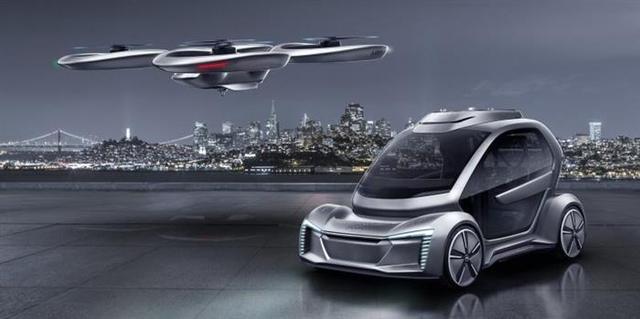
So, the times shape the product, while technology constrains it. When it comes to low-altitude manned and cargo-carrying aircraft, design approaches have already converged, with eVTOL (electric vertical takeoff and landing vehicles) emerging as a widely accepted concept. Modern cities demand that low-altitude flights operate without relying on traditional runways, enabling agile maneuvers even in tight, confined spaces—and all this while maintaining near-silent operation (noise levels must stay below 80 decibels). This means that, despite fuel offering far greater energy density than batteries, oil-burning low-altitude aircraft—whether powered by jet fuel or gasoline—are increasingly being ruled out for urban applications.
Compared to the conventional shape of traditional commercial airplanes, eVTOL designs appear quite different. However, since these vehicles are battery-powered—barring a small number of hybrid models—their configurations are primarily limited by power requirements and intended use cases. Currently, the most common designs include multirotor types (similar to the classic quadcopters used in drones), lift-based designs, vector-thrust systems, and ducted-vector-thrust variants. Regardless of the specific type, because they rely on vertical takeoff and landing, none are equipped with wheels; instead, they almost universally feature skid-type landing gear.
Currently, most automakers are experimenting with multi-rotor designs—driven not only by their simple engineering but also by the desire to seamlessly transition between ground driving and aerial flight. This dual-purpose approach demands an extremely lightweight design, along with wings that can be easily disassembled, reconfigured, and assembled for flight. When it comes to driving, vehicles must counteract lift forces; in contrast, aircraft prioritize maximizing the lift-to-drag ratio. Fundamentally, airplanes are machines that trade drag for lift—something that would clearly hinder a car’s performance. After all, envisioning a scenario like in the early 007 films, where a car spontaneously sprouts wings mid-drive and takes off, or even extends a tail propeller to transform into a submarine—it’s pure fantasy from an engineering standpoint. Relying solely on simplistic shape changes makes it nearly impossible to reconcile the vastly opposing requirements of both driving and flying. Even more awkward is the fact that components designed for driving—such as suspension systems, shock absorbers, and tires—would become cumbersome liabilities during flight. And given today’s material limitations, current prototypes of amphibious flying vehicles struggle to deliver impressive performance in either scenario.
Flying cars represent a trade-off in performance—both on the ground and in the air. All these design approaches inevitably compromise due to the current limitations in battery energy density. While companies confidently outline timelines for airworthiness certification, commercial sales, and even the establishment of airborne operations companies, the fundamental logic of a sustainable business model remains unmet. After all, the system reliability required for commercial aircraft operations is far higher than that demanded by passenger vehicles. The consequences of a car breaking down versus an aircraft malfunctioning can be vastly different. For instance, overstated range figures aren’t always intentional; accurately calibrating lithium-iron batteries for low-temperature discharge has long been a significant challenge. Yet, an aircraft clearly cannot tolerate a situation where 30% of its battery capacity suddenly drops to zero. This, in turn, compels manufacturers to rely on today’s highest-energy-density battery technologies. The good news? There’s no need to design an exceptionally robust pack structure (which actually makes weight reduction easier). After all, eVTOLs aren’t required to meet stringent collision safety standards. This further underscores the unreliability of amphibious applications in this context.
Compared to cars, which constantly face interactions with other road users, aircraft operating on designated air routes enjoy exclusive, safe airspace (in terms of altitude and lateral/longitudinal separation), eliminating the complexity of "traffic conditions" on the ground. Meanwhile, eVTOL vehicles have extremely low autonomous driving requirements—so low, in fact, that this capability may not even serve as a key product feature. Although the original flight control systems emerged over 100 years ago, it wasn’t until the 1950s that fully integrated autopilots were developed, enabling closed-loop control of an aircraft’s three-dimensional attitude and flight path by precisely managing all its onboard actuators. If low-altitude airspace below 1,000 meters were opened up for unrestricted use, the resulting air traffic would undoubtedly become far more intricate than what we experience on the ground. To address this challenge, it’s essential to establish a comprehensive, three-dimensional low-altitude air traffic management system—leveraging cloud-based intelligence to provide real-time navigation guidance, command coordination, and traffic control for all types of aerial vehicles, both manned and unmanned. This approach contrasts sharply with the current automotive industry trend, where local intelligence solutions are prioritized while the development of smart city infrastructure—and particularly cloud-driven, urban-scale air traffic management—remains relatively underdeveloped. In other words, building a robust low-altitude air traffic control system must be a top priority from the very beginning.
Currently, nearly 30 provinces across the country have included the development of the "low-altitude economy" in their government work reports. Some provinces and cities have already introduced relevant policies and even launched pilot programs. However, until the cloud-based intelligent air traffic management system is operational, the low-altitude economy can only remain at the planning stage. For instance, a few eVTOL aircraft have conducted test flights in open areas without requiring an air traffic management system. So far, hardly any companies have shown interest in developing this cloud-based intelligent air traffic control system—largely because urban low-altitude airspace has yet to be truly opened up.
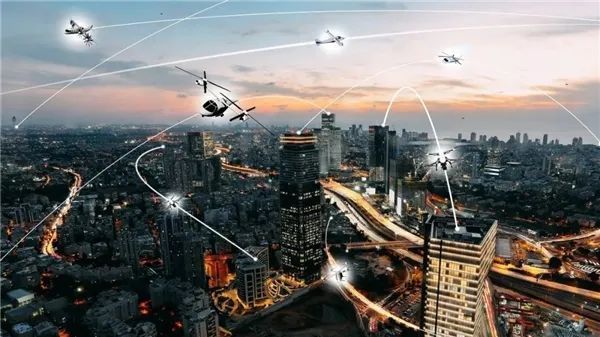
Of course, local governments are also not rushing to deploy cloud systems right now—not only because cloud intelligence is still immature, but also because the commercialization of eVTOL products remains in its early stages. Currently, manufacturers are waiting for policy easing (specifically, the top-level design for low-altitude airspace management and improved airspace connectivity across regions), while policymakers, in turn, are patiently awaiting further technological advancements. Given that these various constraints are intricately intertwined, it’s challenging for all parties involved to persuade each other to take the first step. As a result, under these circumstances, capital should exercise patience: until the product achieves robust certification for passenger safety, it would be unwise to kick off full-scale commercialization. While investors are enthusiastically nurturing the "low-altitude economy dream," reality reminds us that actual realization will likely require several more years. After all, the timeline for the rise of electric vehicles simply doesn’t apply to "flying cars."
Translated from Sina Auto
The low-altitude economy is still in the dream stage.
2024-12-27
The low-altitude economy is still in the dream stage.
Earlier in 2024, several domestic automakers—including GAC, Changan, Geely, and Xpeng—have collectively unveiled their "flying cars." Over the past two decades, interest in small low-altitude aircraft has waned among major foreign aviation companies. However, when combined with the concept of drones, these vehicles have evolved into manned low-altitude flying devices, gradually revealing their promising commercial potential. Compared to domestic automakers, companies like Toyota, Honda, Suzuki, Audi, Mercedes-Benz, Porsche, General Motors, Hyundai, and Stellantis also have similar projects under development. Meanwhile, tech giants such as Google, Intel, and Uber have entered this emerging field around the same time. To date, although a handful of startups have gone public, none of these companies has yet achieved clear commercial delivery milestones. As for how many firms globally are actively engaged in developing and manufacturing low-altitude flying vehicles, the exact number remains unclear. Some estimates suggest there are over 400 companies working on this frontier, with more than 80 based in China. While these figures remain unverified for now, they underscore that, despite decades of progress, the industry is still on the cusp of full-scale commercialization.
When the industry shows clear signs of acceleration, automakers that have been slower to act are scrambling to get involved—whether through joint ventures, collaborations, or acquisitions—even if they don’t have time to develop the technology themselves. At stake is the fear of being left far behind by the rapidly evolving prospects of commercialization. Throughout the long evolution of "flying cars," the primary constraint has always been technology, not policy. Of course, "flying car" isn’t an entirely precise term; what it shares with electric vehicles is their reliance on battery power. With just a bit of observation, one can easily see that the low-altitude aircraft developed by aerospace manufacturers at the turn of the century were fundamentally different species compared to the products now being introduced by automakers and startups two decades later. Today’s low-altitude flying vehicles represent the culmination of advancements across multiple disciplines—such as batteries, electric motors, flight control systems, and advanced composite materials—all reaching critical maturity points. From this perspective, electric vehicles and flying cars actually share far more common ground in terms of foundational components and materials than in overall design concepts. In fact, it’s said that the overlap in their supply chains exceeds 70%.
So, the times shape the product, while technology constrains it. When it comes to low-altitude manned and cargo-carrying aircraft, design approaches have already converged, with eVTOL (electric vertical takeoff and landing vehicles) emerging as a widely accepted concept. Modern cities demand that low-altitude flights operate without relying on traditional runways, enabling agile maneuvers even in tight, confined spaces—and all this while maintaining near-silent operation (noise levels must stay below 80 decibels). This means that, despite fuel offering far greater energy density than batteries, oil-burning low-altitude aircraft—whether powered by jet fuel or gasoline—are increasingly being ruled out for urban applications.
Compared to the conventional shape of traditional commercial airplanes, eVTOL designs appear quite different. However, since these vehicles are battery-powered—barring a small number of hybrid models—their configurations are primarily limited by power requirements and intended use cases. Currently, the most common designs include multirotor types (similar to the classic quadcopters used in drones), lift-based designs, vector-thrust systems, and ducted-vector-thrust variants. Regardless of the specific type, because they rely on vertical takeoff and landing, none are equipped with wheels; instead, they almost universally feature skid-type landing gear.
Currently, most automakers are experimenting with multi-rotor designs—driven not only by their simple engineering but also by the desire to seamlessly transition between ground driving and aerial flight. This dual-purpose approach demands an extremely lightweight design, along with wings that can be easily disassembled, reconfigured, and assembled for flight. When it comes to driving, vehicles must counteract lift forces; in contrast, aircraft prioritize maximizing the lift-to-drag ratio. Fundamentally, airplanes are machines that trade drag for lift—something that would clearly hinder a car’s performance. After all, envisioning a scenario like in the early 007 films, where a car spontaneously sprouts wings mid-drive and takes off, or even extends a tail propeller to transform into a submarine—it’s pure fantasy from an engineering standpoint. Relying solely on simplistic shape changes makes it nearly impossible to reconcile the vastly opposing requirements of both driving and flying. Even more awkward is the fact that components designed for driving—such as suspension systems, shock absorbers, and tires—would become cumbersome liabilities during flight. And given today’s material limitations, current prototypes of amphibious flying vehicles struggle to deliver impressive performance in either scenario.
Flying cars represent a trade-off in performance—both on the ground and in the air. All these design approaches inevitably compromise due to the current limitations in battery energy density. While companies confidently outline timelines for airworthiness certification, commercial sales, and even the establishment of airborne operations companies, the fundamental logic of a sustainable business model remains unmet. After all, the system reliability required for commercial aircraft operations is far higher than that demanded by passenger vehicles. The consequences of a car breaking down versus an aircraft malfunctioning can be vastly different. For instance, overstated range figures aren’t always intentional; accurately calibrating lithium-iron batteries for low-temperature discharge has long been a significant challenge. Yet, an aircraft clearly cannot tolerate a situation where 30% of its battery capacity suddenly drops to zero. This, in turn, compels manufacturers to rely on today’s highest-energy-density battery technologies. The good news? There’s no need to design an exceptionally robust pack structure (which actually makes weight reduction easier). After all, eVTOLs aren’t required to meet stringent collision safety standards. This further underscores the unreliability of amphibious applications in this context.
Compared to cars, which constantly face interactions with other road users, aircraft operating on designated air routes enjoy exclusive, safe airspace (in terms of altitude and lateral/longitudinal separation), eliminating the complexity of "traffic conditions" on the ground. Meanwhile, eVTOL vehicles have extremely low autonomous driving requirements—so low, in fact, that this capability may not even serve as a key product feature. Although the original flight control systems emerged over 100 years ago, it wasn’t until the 1950s that fully integrated autopilots were developed, enabling closed-loop control of an aircraft’s three-dimensional attitude and flight path by precisely managing all its onboard actuators. If low-altitude airspace below 1,000 meters were opened up for unrestricted use, the resulting air traffic would undoubtedly become far more intricate than what we experience on the ground. To address this challenge, it’s essential to establish a comprehensive, three-dimensional low-altitude air traffic management system—leveraging cloud-based intelligence to provide real-time navigation guidance, command coordination, and traffic control for all types of aerial vehicles, both manned and unmanned. This approach contrasts sharply with the current automotive industry trend, where local intelligence solutions are prioritized while the development of smart city infrastructure—and particularly cloud-driven, urban-scale air traffic management—remains relatively underdeveloped. In other words, building a robust low-altitude air traffic control system must be a top priority from the very beginning.
Currently, nearly 30 provinces across the country have included the development of the "low-altitude economy" in their government work reports. Some provinces and cities have already introduced relevant policies and even launched pilot programs. However, until the cloud-based intelligent air traffic management system is operational, the low-altitude economy can only remain at the planning stage. For instance, a few eVTOL aircraft have conducted test flights in open areas without requiring an air traffic management system. So far, hardly any companies have shown interest in developing this cloud-based intelligent air traffic control system—largely because urban low-altitude airspace has yet to be truly opened up.
Of course, local governments are also not rushing to deploy cloud systems right now—not only because cloud intelligence is still immature, but also because the commercialization of eVTOL products remains in its early stages. Currently, manufacturers are waiting for policy easing (specifically, the top-level design for low-altitude airspace management and improved airspace connectivity across regions), while policymakers, in turn, are patiently awaiting further technological advancements. Given that these various constraints are intricately intertwined, it’s challenging for all parties involved to persuade each other to take the first step. As a result, under these circumstances, capital should exercise patience: until the product achieves robust certification for passenger safety, it would be unwise to kick off full-scale commercialization. While investors are enthusiastically nurturing the "low-altitude economy dream," reality reminds us that actual realization will likely require several more years. After all, the timeline for the rise of electric vehicles simply doesn’t apply to "flying cars."
Translated from Sina Auto

Contact us
Email:
info@adtfm.com
Phone:
021-20532053
Address:
2nd Floor, No. 150 Jindian Road, Pudong New Area, Shanghai

Phone:021-50790270
Email:info@adtfm.com
Website:www.adtfm.com
Address: Room 403, Building B, No. 115 Guiqiao Road, Pudong New Area, Shanghai


Leave a message for inquiry